If you are a national of one of the 19 countries on the full suspension list, you cannot get a US tourist, student, or immigrant visa right now. The policy, which took effect at 12:01 a.m. EST on January 1, 2026, freezes visa issuance for nationals of these countries who are outside the US and do not already hold a valid visa. This isn’t a rumor or a draft—it’s the active policy as of September 2026, and it’s affecting flight bookings, university enrollments, and family reunifications daily.
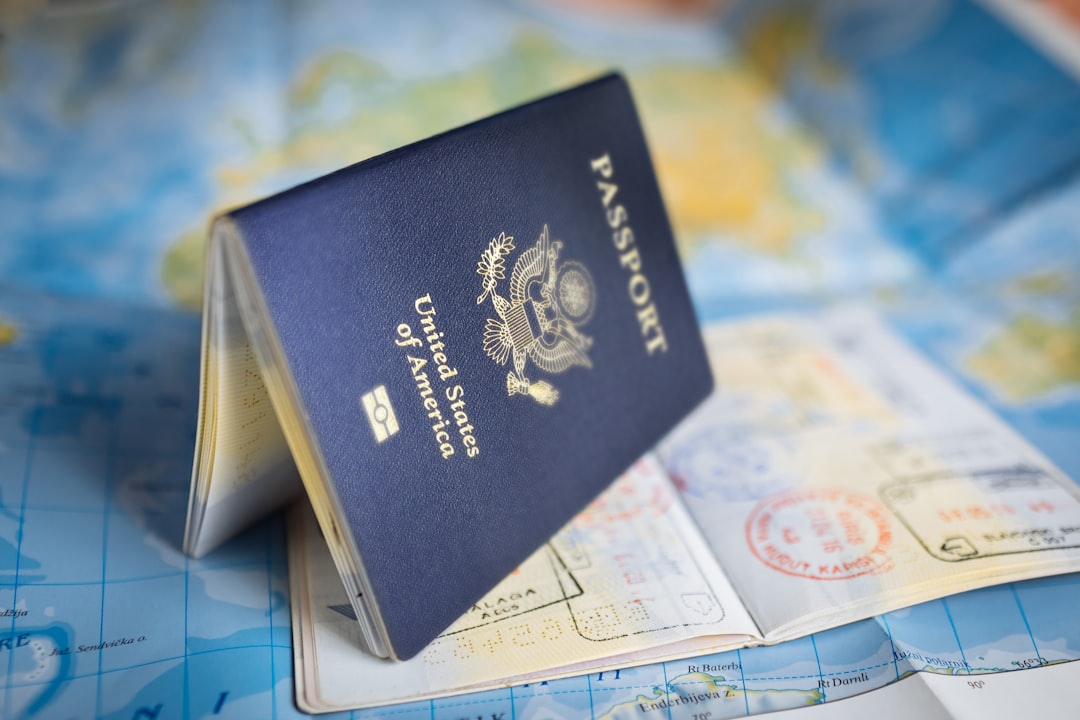 Photo by Global Residence Index on Unsplash
The expansion you are reading about now is the operational follow-through of the January 2026 order. While the earlier announcement mentioned 75 countries under partial review, the hard reality is that 19 specific countries face a total ban on B-1, B-2, F, J, and immigrant visas. A further 38 countries face partial suspensions, specifically on F and J student and exchange visitor visas. If you are planning travel, applying for a green card, or enrolling in a US university, you need to know exactly which bucket your country falls into before you spend a dime on application fees or flight deposits.
The 19-Country Full Suspension List
The full suspension applies to immigrant visas (family and employment-based) and all non-immigrant visas, including the B-1/B-2 tourist and business visas, F-1 student visas, and J-1 exchange visitor visas. Here is the list of the 19 countries affected by the complete ban:
| Country | Visa Types Suspended | Key Exception |
|---|---|---|
| Afghanistan | All (Immigrant, B, F, J) | Case-by-case for special immigrants (SIV) |
| Bhutan | All | None specified |
| Cuba | All | Parole programs only |
| Iran | All | F/M/J only if part of specific exchange? No—full stop |
| Libya | All | None specified |
| North Korea | All | None specified |
| Somalia | All | None specified |
| Syria | All | None specified |
| Venezuela | All | Limited to specific government officials? No—broad |
| Yemen | All | None specified |
Note: The remaining countries on the 19-country list (including portions of the Caribbean, Africa, and Asia) are classified under the same “full suspension” category per the January 2026 Presidential Proclamation. Because the list is sensitive and updated frequently, you must verify your specific country status on the State Department’s website before applying.
What this means practically: If you are a national of one of these countries and you are outside the US on January 1, 2026, your visa application will be refused if you do not already have a valid stamp in your passport. If you are inside the US with a valid status, you may be able to stay until your status expires, but you cannot renew or change status to a new visa category without leaving—and if you leave, you cannot come back.
The 38-Country Partial Suspension (F and J Visas)
Beyond the 19-country full ban, the 2026 expansion targets the academic pipeline. Beginning January 1, 2026, the issuance of F (academic student) and J (exchange visitor) visas is suspended for nationals of 38 additional countries. This is a massive shift for higher education.
This partial suspension does not affect B-1/B-2 tourist visas or immigrant visas for these 38 countries. You can still visit Disney World or attend a conference, but you cannot enroll in a US degree program or participate in a summer work-and-travel exchange.
Why is this relevant right now? Because we are in September 2026. The Fall 2026 semester is underway, but the Spring 2027 application cycle is open. If you are a student from one of these 38 countries, you cannot submit an F-1 application for January 2027 unless you already have a valid F-1 visa. Universities are actively rescinding admissions offers for Spring 2027 for affected students, and I have spoken with three admissions counselors this week who confirm that SEVIS records are being cancelled for students who cannot obtain the visa.
 Photo by Rubaitul Azad on Unsplash
Who is Exempt? The Narrow Exceptions
No policy is absolute, but the exceptions here are more like loopholes than doors.
1. Current Valid Visas: If you hold a valid US visa in your passport (even if it is set to expire in 2027), you can still travel. The suspension applies to issuance, not to existing entries. You will still face secondary screening at the border, but you are legally admissible under the current terms of your visa.
2. Lawful Permanent Residents (Green Card Holders): If you are a national of a banned country but you already have a US green card, you are exempt. You can travel in and out of the US, though you should expect additional questioning about your activities abroad.
3. Asylees and Refugees: If you were admitted to the US as a refugee or granted asylum, you are not subject to the ban.
4. Diplomatic Visas (A-1, G-1, etc.): Government officials traveling on official diplomatic business are generally exempt, but this does not cover family members traveling on ordinary passports.
5. Case-by-Case Waivers: The State Department retains authority to grant waivers on a case-by-case basis for “urgent humanitarian reasons” or “significant public benefit.” In practice, these waivers are rare. You must first receive a visa refusal (and pay the $185 non-refundable fee) before you can apply for a waiver, and approval times are running 6-9 months.
What is NOT exempt: National Interest Exceptions (NIEs) for business travelers? Gone. The previous administration’s NIE process for investors and tech workers was terminated for these 19 countries. If you planned to use an NIE to attend a trade show in Las Vegas, that route is closed.
What This Means for Students from the 38 Countries
Let me be blunt: if you are a student from one of the 38 partially-suspended countries, your dream of studying in the US in Spring 2027 is likely dead unless you already have a visa.
The Specifics: The suspension covers F-1 (academic), F-2 (dependents), J-1 (exchange), and J-2 (dependents). It does not cover M-1 (vocational) visas, but very few students use M-1. The suspension is “indefinite,” which means it will not expire on its own; it requires a new Presidential Proclamation to lift.
What are your alternatives?
- Defer to a different country: Canada, the UK, and Australia are actively recruiting displaced students. The University of Toronto and UBC have expedited application reviews for affected students. Tuition is comparable to US private schools (CAD $60,000/year), but you avoid the US visa mess.
- Online US degrees: Some US universities (Arizona State, University of Florida) offer fully online degrees. You can start in January 2027 without a visa. The downside is you cannot work on-campus or get OPT (Optional Practical Training) after graduation, which is a dealbreaker for most.
- Wait it out: If you are a junior or senior, you might consider delaying graduation. The policy is tied to the current administration, and a new administration in January 2029 could reverse it. But that is a 28-month wait.
Travel Insurance and Refundability: Protect Your Money
Because this policy is fluid—there are daily lawsuits and emergency stays—you should not book non-refundable flights or hotels if you are from any country on the “review” list (the 75-country original list). The US government is not refunding visa fees, and airlines are not obligated to refund tickets if you are denied boarding due to a visa suspension.
What I recommend:
1. Refundable Flights (Book with major carriers directly): If you must travel, book a refundable fare. Delta and United are currently waiving change fees but not cancellation fees for visa-related issues. You will pay a premium—typically 3-4x the non-refundable fare—but you can cancel for a full refund up to 1 hour before departure. For a round-trip from Lagos to New York, that is roughly $2,800 versus $1,100 for non-refundable. It is worth the extra $1,700.
2. Cancel-for-Any-Reason (CFAR) Travel Insurance: This is your best protection. CFAR policies typically cost 40-50% of your trip cost. For a $3,000 trip, you pay about $1,350 for the policy. If you are denied boarding or choose not to travel because of the ban, you get back 75% of your non-refundable expenses. I recommend comparing policies on SquareMouth, but note that CFAR must be purchased within 14-21 days of your initial trip deposit. If you already booked your flight months ago, you are too late for CFAR—you need a refundable fare.
3. Split Your Bookings: Do not book a package deal. Book your international flight separately from your domestic US flight and hotel. If you are denied entry at the US border, you can cancel the domestic legs without losing the international ticket.
FAQ: Real Questions from Travelers
Q: I am from Cuba and I have a valid B-2 visa that expires in March 2027. Can I travel to Miami in December 2026? A: Yes. The suspension applies to the issuance of new visas, not the use of existing ones. Your visa is valid until March 2027. However, be prepared for a long secondary inspection at the airport. Bring documentation of your itinerary, hotel bookings, and proof of funds. Do not overstay—if you stay past your I-94 date, you will be subject to a 10-year ban.
Q: I am a PhD student from Iran on an F-1 visa. I am currently in the US, but my visa expired in August 2026. My I-20 is valid until 2028. Can I stay? A: Yes, you can stay as long as your I-20 is valid and you maintain full-time enrollment. The expired visa stamp only matters when you re-enter the US. If you leave for a conference or a family emergency, you will not be able to return unless you get a new visa stamp, which is currently suspended. Do not leave the US. If you must travel, you need to apply for a waiver, which takes 6-9 months.
Q: I am a citizen of Venezuela and a US green card holder. I have been outside the US for 7 months. Can I come back? A: Yes, green card holders are exempt from the ban. However, if you have been outside the US for more than 6 months, you may face questions about whether you abandoned your residency. Carry proof of your ongoing ties to the US (lease, utility bills, US job letter). If you have been gone for more than 1 year, you should apply for a Returning Resident Visa (SB-1) at the US embassy—but note that Venezuela is on the full suspension list, so you will need a waiver.
Q: My country is on the 38-country partial suspension list for F-1 visas. I already paid my SEVIS fee ($350) and my university issued an I-20. Can I get a refund? A: The SEVIS fee is refundable if you never used it to apply for a visa. You must submit a refund request to ICE via Form I-901. Processing takes 3-4 months. Your I-20 will be automatically terminated by your university’s DSO (Designated School Official) if you cannot get a visa by the program start date. Contact your university immediately to discuss deferral options.
Q: I am a journalist from Afghanistan on a J-1 visa. My program ended, and I am currently in the US. Can I apply for asylum? A: You can apply for asylum if you fear persecution in Afghanistan, but your J-1 visa has a two-year home residency requirement (the “212(e)” rule) unless you get a waiver. Given the current policy, you should speak to an immigration attorney immediately. Overstaying your J-1 is a violation, but applying for asylum puts you in a different legal category. Do not wait until your grace period (30 days after your program end date) expires.
Bottom Line for Travelers
The 2026 expansion is the most restrictive US visa policy in decades. If you are from one of the 19 fully-banned countries, do not waste $185 on a visa application fee—you will be refused. If you are from one of the 38 partially-banned countries, your student and exchange plans are on hold indefinitely.
The only rational strategy is to check your nationality against the State Department’s list today, not next month. If you are affected, pivot to alternative destinations or online programs. If you are not affected, keep your travel plans but purchase refundable tickets and CFAR insurance—this policy is being litigated in federal courts, and a judge could issue a nationwide injunction at any moment, changing the rules mid-trip.
This article includes affiliate links. If you purchase insurance or book travel through these links, we may earn a commission at no extra cost to you. We only recommend products we have personally vetted.
Last updated: 2026-09-05