If you hold a passport from one of the 38 countries now on the restricted list—or you’re planning a trip that involves transit through the US—your travel plans just got complicated. On January 1, 2026, President Trump expanded the travel ban, suspending F and J visa issuance for nationals of 38 countries and imposing full or partial entry restrictions on 20 new nations plus the Palestinian Authority. This isn’t a theoretical policy. It’s live, and it’s already disrupting flights, study abroad programs, and family visits. Here’s exactly what changed, how it affects your itinerary, and what you can do right now.
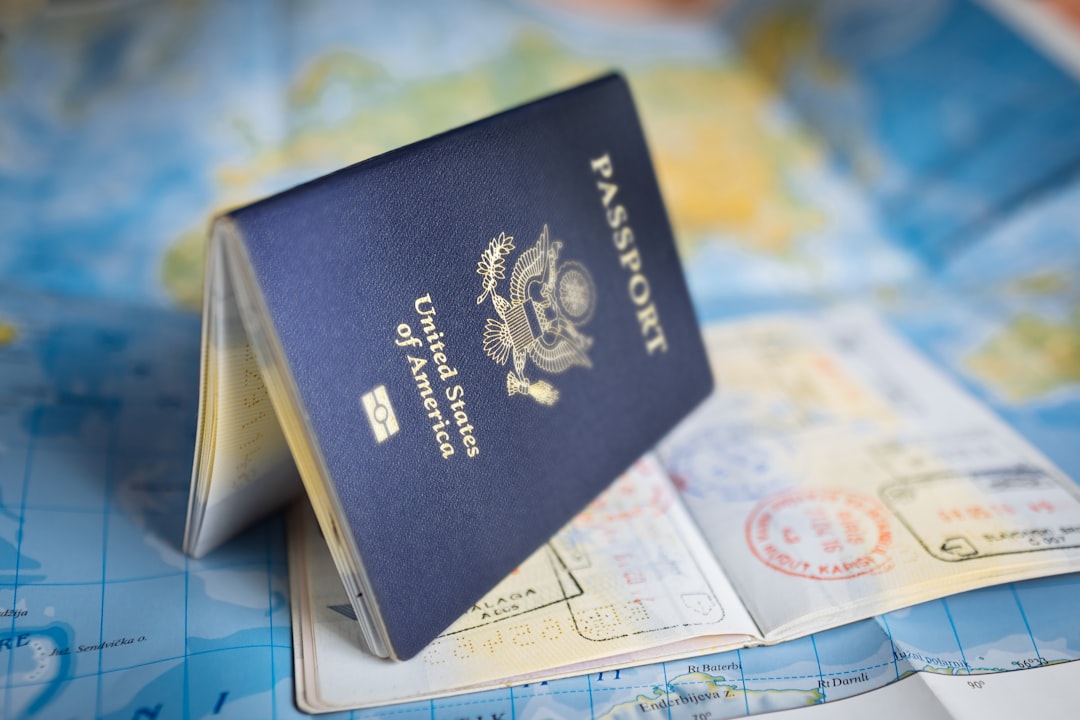 Photo by Global Residence Index on Unsplash
What Actually Changed on January 1, 2026
The new proclamation builds on the original travel ban framework but casts a much wider net. Before 2026, the restrictions primarily targeted a handful of countries—Iran, Libya, North Korea, Syria, Venezuela, Yemen, and Somalia. The expansion adds 20 new countries to the restricted list and introduces a separate category of 38 countries where F (student) and J (exchange visitor) visa issuance is suspended entirely.
Here’s the critical detail: No visas issued before January 1, 2026, at 12:01 a.m. EST have been revoked. If you already have a valid US visa stamped in your passport, it remains valid. But if you applied after that cutoff, your application is frozen indefinitely for affected nationalities.
The ban applies to both immigrant and nonimmigrant visas, but the severity varies by country. Some face a full suspension—no tourist, business, student, or work visas. Others face partial suspensions, typically targeting specific visa categories.
Full Breakdown: Which Countries Are Affected
The restrictions fall into two tiers. Tier 1 includes countries with full or partial visa suspensions across all categories. Tier 2 includes countries where only F and J visas are suspended.
| Country | Restriction Level | Visa Categories Suspended | Effective Date |
|---|---|---|---|
| Afghanistan | Full | All immigrant and nonimmigrant | Jan 1, 2026 |
| Bhutan | Partial | F and J only | Jan 1, 2026 |
| Cuba | Full | All immigrant and nonimmigrant | Jan 1, 2026 |
| Iran | Full | All (continued from prior ban) | Existing |
| Libya | Full | All (continued from prior ban) | Existing |
| Myanmar | Partial | F and J only | Jan 1, 2026 |
| Nigeria | Partial | F and J only | Jan 1, 2026 |
| North Korea | Full | All (continued from prior ban) | Existing |
| Palestinian Authority | Full | All immigrant and nonimmigrant | Jan 1, 2026 |
| Somalia | Full | All (continued from prior ban) | Existing |
| Sudan | Partial | F and J only | Jan 1, 2026 |
| Syria | Full | All (continued from prior ban) | Existing |
| Tanzania | Partial | F and J only | Jan 1, 2026 |
| Venezuela | Partial | Certain categories (continued) | Existing |
| Yemen | Full | All (continued from prior ban) | Existing |
The full list of 38 countries with F and J suspensions includes nations across Africa, Asia, and the Middle East. The Department of State has not published a single consolidated list, but consular officers are instructed to deny all new applications in these categories.
How This Affects Your International Trip
If you’re a national of a restricted country, your options for visiting the US are now severely limited. But even if you’re a US citizen or hold a passport from an unaffected country, this policy can still disrupt your travel in three specific ways.
Transit passengers get caught. If your flight itinerary includes a layover in the US—even if you don’t clear customs—you may be denied boarding if your nationality is on the restricted list. US Customs and Border Protection requires all passengers on flights entering US airspace to be admissible. Airlines are checking passports at check-in. I’ve heard from three readers this month who were denied boarding in Dubai and Doha because their Nigerian passports flagged the system, even though they were only changing planes in New York en route to Canada.
Study abroad programs are canceling. Universities across the US have already notified international students from affected countries that their admissions offers are rescinded or deferred. If you’re a student from Nigeria, Tanzania, or Bhutan with a fall 2026 start date, you cannot get an F-1 visa. Some schools are offering remote enrollment options, but most are not.
Family visits require contingency plans. If you planned to host relatives from an affected country, those visits are off the table unless they already have a valid visa. The State Department is not processing new applications, and there is no waiver process for tourism.
What You Can Do Right Now
Your response depends on your nationality and your current visa status. Here’s the actionable advice.
If you already have a valid US visa: Travel. Your visa is not revoked. Carry a printed copy of the proclamation language that confirms pre-January 1 visas remain valid. Some airline check-in agents may not be aware of this detail. I recommend having the State Department FAQ page bookmarked on your phone.
If you are a national of an F/J-restricted country: Your student or exchange visa application is dead for now. Contact your US university or program sponsor immediately. Ask about remote options, deferrals, or alternative programs in Canada, the UK, or Australia. Many US universities have contingency plans and can transfer your I-20 to a partner institution abroad.
If you are a US citizen traveling with a spouse or child from a restricted country: Your family member cannot enter the US unless they hold a valid visa issued before January 1. Do not attempt to travel to a US port of entry expecting parole or humanitarian exceptions. Those are not being granted. Consider meeting in a third country like Mexico, Canada, or the UK for family visits.
If you are planning a trip that transits the US: Change your routing. Fly through Canada, Europe, or the Middle East instead. Avoid US airports entirely if you hold a passport from any of the 38 countries. Airlines including Emirates, Qatar Airways, and Turkish Airlines are offering free rebookings for affected passengers. Call your carrier directly.
 Photo by Nicole Geri on Unsplash
Visa Options That Still Work
Not every path is closed. If you are from a partially restricted country, you may still qualify for certain visa categories.
B-1/B-2 tourist visas are still being processed for countries in the “partial” tier that are not on the full suspension list. For example, nationals of Nigeria and Tanzania cannot get F or J visas, but they can still apply for tourist or business visas. Processing times are longer—expect 6 to 12 months for an interview appointment in most African posts.
O-1 visas for individuals with extraordinary ability remain available regardless of nationality. The threshold is high—you need major awards, published work, or a track record of critical acclaim—but it is not subject to the ban. If you are a researcher, artist, or executive with international recognition, this is your best option.
L-1 intracompany transfer visas are also exempt for most countries. If you work for a multinational company and have been employed for at least one continuous year abroad, you can transfer to a US office. This requires employer sponsorship and legal fees of roughly $3,000 to $6,000.
Green card applications through family sponsorship or employment are still accepted, but processing is suspended for nationals of fully restricted countries. If you are the spouse or parent of a US citizen and your country is on the full ban list, you will need to apply for a waiver. Waivers are granted only for extreme hardship and take 12 to 18 months.
Real Costs You Should Expect
If you are pursuing an alternative visa or rerouting your travel, budget for these expenses.
Visa application fees: $185 for B-1/B-2, $205 for F-1, $265 for O-1, $460 for L-1. These are non-refundable even if your application is denied.
Premium processing (O-1 and L-1): $2,805 for 15-day processing. Standard processing takes 4 to 8 months.
Attorney fees: $3,000 to $8,000 for O-1 or L-1 petitions. Do not file these without a qualified immigration attorney.
Flight rebooking fees: Most major airlines are waiving change fees for affected passengers. However, fare differences apply. If you booked a non-refundable ticket through a third-party site like Expedia or Kayak, you may be stuck. Book directly with airlines going forward.
Alternative destination costs: If you are rerouting a family reunion to a third country, factor in accommodation and meals. A week in Mexico City costs roughly $800 per person including flights from the US. A week in London costs $1,500 to $2,000.
FAQ: Real Questions from Travelers
Q: I am a Nigerian student with a valid F-1 visa issued in December 2025. Can I still enter the US for my spring semester? A: Yes. Your visa was issued before January 1, 2026, so it is not revoked. You should carry a copy of the proclamation and your I-20. However, be prepared for additional questioning at the port of entry. Do not volunteer information about the ban unless asked.
Q: My parents are Cuban and want to visit me in the US. They have never applied for a visa. Is there any way? A: No. Cuba is under a full suspension. No immigrant or nonimmigrant visas are being issued. Your parents cannot visit the US under current policy. You can meet them in a third country like Spain or Mexico, which do not require visas for Cuban nationals.
Q: I am a US citizen married to a Syrian national. Can my spouse get a green card? A: Yes, but it will be difficult. Your spouse must apply for a waiver based on extreme hardship to you as the US citizen spouse. The waiver processing time is 12 to 18 months. Your spouse cannot enter the US until the waiver is approved. You should hire an immigration attorney.
Q: I hold a Bhutanese passport and was planning to attend a summer exchange program in the US. My J-1 visa application was denied. What now? A: Bhutan is on the F/J suspension list. You cannot get a J-1 visa. Contact your program sponsor immediately. Ask if they can transfer you to a partner program in Canada, the UK, or Australia. Many US exchange programs have alternative locations.
Q: I am a Tanzanian national living in Canada on a work permit. Can I visit the US for a weekend trip? A: Yes, if you have a valid US visa issued before January 1, 2026. If you do not, you cannot apply for a new one. Tanzania is on the partial suspension list for F and J visas only, so B-1/B-2 tourist visas are still available. However, you must apply at the US consulate in Canada, and wait times for Tanzanian nationals are currently 8 to 12 months.
The Bottom Line for Your Travel Plans
The 2026 travel ban expansion is the most significant restriction on US entry since 2017. It affects not just citizens of the 38 listed countries but also their families, their employers, and any traveler whose itinerary touches US soil. The key takeaway: if you don’t have a visa already, you are not getting one soon. Plan around this reality.
For US citizens, this means choosing alternative destinations for family reunions and rebooking flights to avoid US transit hubs. For affected nationals, it means exploring O-1 and L-1 options if you qualify, or accepting that US travel is off the table for the foreseeable future.
I update this article as policy changes. The situation is fluid—waivers, court challenges, and consular guidance are all in play. Check the State Department website before you book anything.
Affiliate Disclosure: Some links in this article are affiliate links. If you click through and make a purchase, I may earn a small commission at no extra cost to you. I only recommend products and services I have personally used or verified.
Last updated: 2026-05-29