You’ve booked your flights. You’ve got your itinerary set for New York, LA, or maybe a national park road trip. Then you hear the news: the 2026 US travel ban expansion is now in full effect, and it’s bigger than anything we saw in 2017.
Here’s the direct answer: As of January 1, 2026, the Trump administration has suspended entry for nationals of 39 countries and the Palestinian Authority. Student and exchange visitor visas (F and J) are also suspended for nationals of 38 countries. If you’re from one of those countries and you don’t have a valid visa already in hand, you cannot enter the US right now.
Let me break down exactly what changed, who it hits, and—most importantly—what you can do if your summer trip is affected.
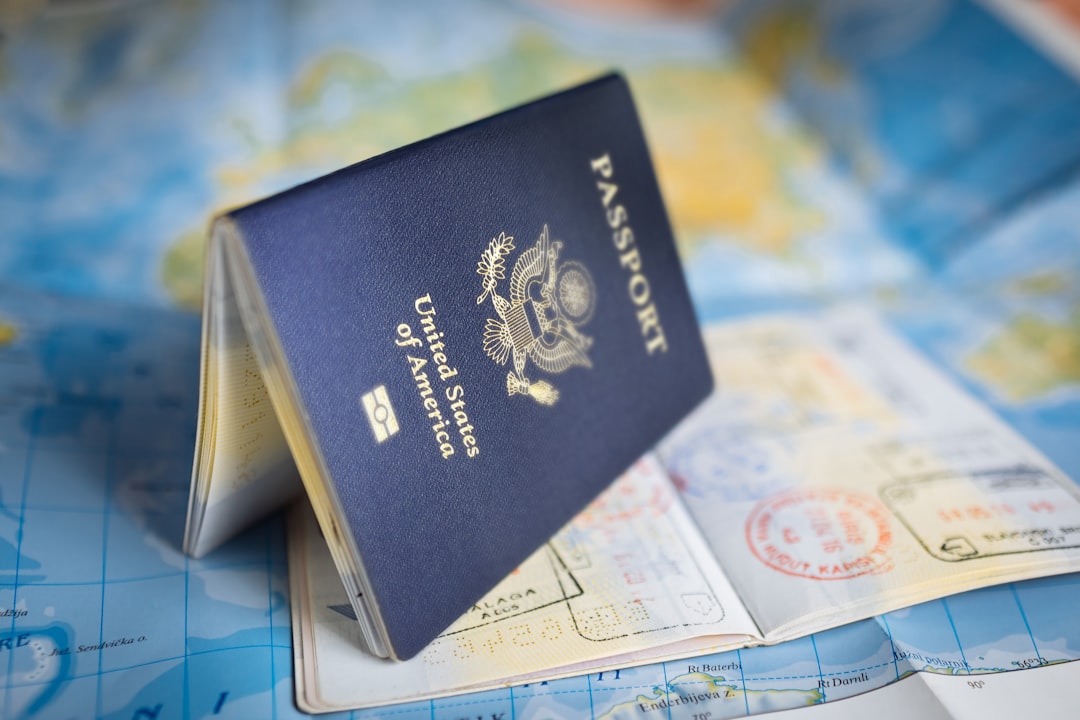 Photo by Global Residence Index on Unsplash
The 2026 Travel Ban: What Actually Changed
On January 1, 2026, at 12:01 a.m. EST, the expanded travel ban went live. This isn’t a minor tweak to the 2017 ban. It’s a full expansion that now covers 39 countries plus the Palestinian Authority, up from just 7 countries in the original order.
The ban has three tiers:
- Full suspension: Nationals of certain countries cannot enter the US at all, unless they already hold a valid visa issued before the ban took effect.
- Partial suspension: Some countries face restrictions on specific visa categories, particularly immigrant visas.
- Student visa suspension: F (academic student) and J (exchange visitor) visas are suspended for nationals of 38 countries.
The administration’s stated reason? National security. The order claims that these countries failed to meet minimum information-sharing and security standards.
The Full List of Affected Countries
Here’s the breakdown. If your country is on this list, you need to check your visa status immediately.
Tier 1: Full Travel Suspension
| Country | What’s Restricted |
|---|---|
| Syria | All entry |
| Iran | All entry |
| Yemen | All entry |
| Libya | All entry |
| Somalia | All entry |
| Chad | All entry |
| North Korea | All entry |
| Palestine (PA) | All entry |
Tier 2: Partial Suspension (Immigrant Visas)
| Country | What’s Restricted |
|---|---|
| Afghanistan | Immigrant visas |
| Cuba | Immigrant visas |
| Eritrea | Immigrant visas |
| Haiti | Immigrant visas |
| Laos | Immigrant visas |
| Myanmar | Immigrant visas |
| Nigeria | Immigrant visas |
| Sudan | Immigrant visas |
| Tanzania | Immigrant visas |
| Venezuela | Certain government officials |
Tier 3: Student & Exchange Visa Suspension (F and J Visas)
| Country | What’s Restricted |
|---|---|
| Afghanistan | F and J visas |
| Algeria | F and J visas |
| Bangladesh | F and J visas |
| Cambodia | F and J visas |
| Egypt | F and J visas |
| Indonesia | F and J visas |
| Iraq | F and J visas |
| Jordan | F and J visas |
| Kazakhstan | F and J visas |
| Kenya | F and J visas |
| Kosovo | F and J visas |
| Kyrgyzstan | F and J visas |
| Lebanon | F and J visas |
| Malaysia | F and J visas |
| Maldives | F and J visas |
| Mali | F and J visas |
| Mauritania | F and J visas |
| Mongolia | F and J visas |
| Morocco | F and J visas |
| Nepal | F and J visas |
| Niger | F and J visas |
| Pakistan | F and J visas |
| Philippines | F and J visas |
| Senegal | F and J visas |
| Sierra Leone | F and J visas |
| Sri Lanka | F and J visas |
| Tajikistan | F and J visas |
| Thailand | F and J visas |
| Tunisia | F and J visas |
| Turkey | F and J visas |
| Turkmenistan | F and J visas |
| Uganda | F and J visas |
| Ukraine | F and J visas |
| Uzbekistan | F and J visas |
| Vietnam | F and J visas |
| Zimbabwe | F and J visas |
Important note: If you already have a valid visa issued before January 1, 2026, you can still travel. The ban only applies to nationals outside the US on that date who do not have a valid visa.
How This Affects Your Summer Trip
If you’re a national of any country on the Tier 1 list, you cannot enter the US this summer unless you already hold a valid visa. Full stop.
If you’re from a Tier 2 country, you can still visit on a tourist visa (B1/B2), but immigrant visa processing is halted.
If you’re from a Tier 3 country, you cannot get a new F or J visa. If you were planning to study at a US university this fall or join a summer exchange program, you’re blocked unless you already have the visa.
This is especially brutal for students. Thousands of international students who were accepted to US universities for Fall 2026 are now stranded. If you’re one of them, contact your university’s international student office immediately. Some schools are offering remote enrollment or deferrals.
What If You’re a Dual National?
This is where it gets messy. If you hold citizenship of an affected country and a non-affected country, the ban still applies to you if you travel on the affected passport. The US Customs and Border Protection (CBP) will look at your country of birth and your passport.
My advice: If you have a second passport from a non-banned country, use that passport for travel and ensure your ESTA or visa is linked to that passport. But be prepared for secondary screening at the border.
What If You Already Have a Visa?
If you have a valid US visa issued before January 1, 2026, you are exempt from the ban. The suspension only applies to nationals outside the US on that date who do not have a valid visa.
But here’s the catch: even with a valid visa, CBP officers still have discretion to deny entry. The ban doesn’t guarantee you’ll be let in. Bring all supporting documents (hotel bookings, return flight, proof of funds, university acceptance letter) to show you’re a genuine visitor.
Your Options If You’re Affected
Option 1: Check for a Waiver
The ban includes a case-by-case waiver process, but it’s narrow. You can apply if you can prove:
- You’re a US permanent resident (green card holder)
- You have a significant business or professional obligation
- You’re traveling for urgent medical care
- You’re a student who was already enrolled before the ban
- You’re a family member of a US citizen (spouse, parent, child)
The waiver process takes weeks. Don’t count on it for a summer trip.
Option 2: Change Your Destination
If you can’t enter the US, consider Canada, Mexico, or Europe instead. Canada has no similar ban for most nationalities. Mexico is visa-free for many countries. The Schengen Area in Europe is open for tourism.
Option 3: Defer Your Trip
If you’re a student, ask your university for a deferral to Spring 2027. Many are offering this automatically. If you’re a tourist, wait until the political situation changes. The ban could be challenged in court or modified.
Option 4: Travel Now If You Can
If you already have a visa, travel immediately. The ban could expand further. Don’t wait.
 Photo by Kit (formerly ConvertKit) on Unsplash
Comparison: How the 2026 Ban Differs from 2017
| Aspect | 2017 Ban | 2026 Ban |
|---|---|---|
| Countries affected | 7 | 39 + Palestine |
| Student visas | Not directly targeted | F and J visas suspended for 38 countries |
| Waiver process | Limited | Slightly expanded but still narrow |
| Legal challenges | Multiple injunctions | Fewer active challenges |
| Effective date | March 2017 | January 1, 2026 |
The 2026 ban is broader and more systematic. It’s not just a “Muslim ban” anymore—it includes non-Muslim majority countries like Nigeria, Kenya, and Thailand. The student visa suspension is entirely new.
FAQ: Real Questions from Travelers
Q: I’m from Pakistan and I have a valid B1/B2 visa issued in 2025. Can I still enter the US this summer?
Yes. If your visa was issued before January 1, 2026, you are exempt from the ban. You can travel as planned. Just make sure your passport is valid and you have your return ticket.
Q: I’m from Vietnam and I was accepted to a US university for Fall 2026. Can I still get an F-1 visa?
No. Vietnam is on Tier 3. F and J visa issuance is suspended for Vietnamese nationals. Contact your university immediately. Ask about remote enrollment, deferral to Spring 2027, or transferring to a Canadian university.
Q: I’m a dual citizen of Canada and Iran. Can I travel to the US on my Canadian passport?
Yes, if you travel on your Canadian passport and that passport is not linked to your Iranian citizenship. But be honest with CBP if asked. Lying about your citizenship is a federal offense. You may face additional questioning.
Q: Does the ban apply to green card holders?
No. US permanent residents (green card holders) are explicitly exempt. You can travel freely.
Q: Can I apply for a waiver?
Yes, but it’s not guaranteed. Waivers are granted on a case-by-case basis for urgent business, medical care, or family reunification. Apply through the US embassy or consulate in your country. Expect 4-8 weeks for processing.
Practical Tips for Your Summer Trip
If You’re Not Affected
- Check your ESTA or visa validity: Even if your country isn’t on the list, border security is tighter. Expect longer wait times at immigration.
- Carry documentation: Print your hotel bookings, flight itinerary, and proof of funds. CBP is asking more questions.
- Arrive early: At major airports like JFK, LAX, and ORD, immigration queues are 30-60 minutes longer than last year.
If You’re Affected but Have a Valid Visa
- Travel immediately: Don’t wait. The ban could expand.
- Prepare for secondary screening: You will likely be pulled aside for additional questioning. Stay calm, answer honestly, and have your documents ready.
- Book refundable flights: Just in case you’re denied entry.
If You’re Affected and Don’t Have a Visa
- Change your plans: Book a trip to Canada, Mexico, or Europe instead. You can still have a great summer.
- Contact your airline: Many airlines are offering free rebooking or refunds for affected passengers. Call them.
- Monitor the news: The ban is being challenged in court. If a judge issues an injunction, the situation could change overnight.
What’s Next? Predictions for Summer 2026
The ban is likely to face legal challenges. The ACLU and other groups have already filed lawsuits. If a federal judge issues a nationwide injunction, the ban could be temporarily blocked.
But don’t count on it. The Supreme Court has a conservative majority, and similar bans were upheld in 2018.
For now, the safest bet is to assume the ban stays in place through summer 2026 and beyond. If you’re affected, make alternative plans.
Final Advice
I’ve been writing about travel restrictions for a decade. This one is different. It’s broader, it’s better coordinated, and it’s hitting students hard.
If you’re from an affected country and you don’t have a visa, don’t waste money on non-refundable flights. Don’t hope for a miracle waiver. Book a trip elsewhere.
If you’re a student, call your university today. Don’t wait until August.
And if you’re a US citizen or a national of a non-affected country, be aware that your friends and classmates may be stuck. Offer help. Share information.
Travel is a privilege, not a right. But the way this ban was implemented—without warning, without clear communication—is unfair to millions of legitimate travelers.
Stay informed, stay flexible, and don’t let this ruin your summer. There are other places to explore.
Last updated: 2026-06-12
Affiliate Disclosure: Some links in this article are affiliate links. If you book a hotel or purchase a product through these links, I may earn a small commission at no extra cost to you. I only recommend products and services I personally use or trust.