You’ve been planning a trip to the United States this summer, and now you’re hearing about the expanded travel ban that took effect January 1, 2026. Here’s the short version: if you are a national of one of 38 listed countries and you do not already hold a valid US visa, you are currently barred from entering the US. The ban specifically suspends new F (student) and J (exchange visitor) visa issuance for those countries, and blocks entry for nationals of 20 additional countries plus the Palestinian Authority under a separate executive order.
Let’s get straight to what this means for your summer itinerary.
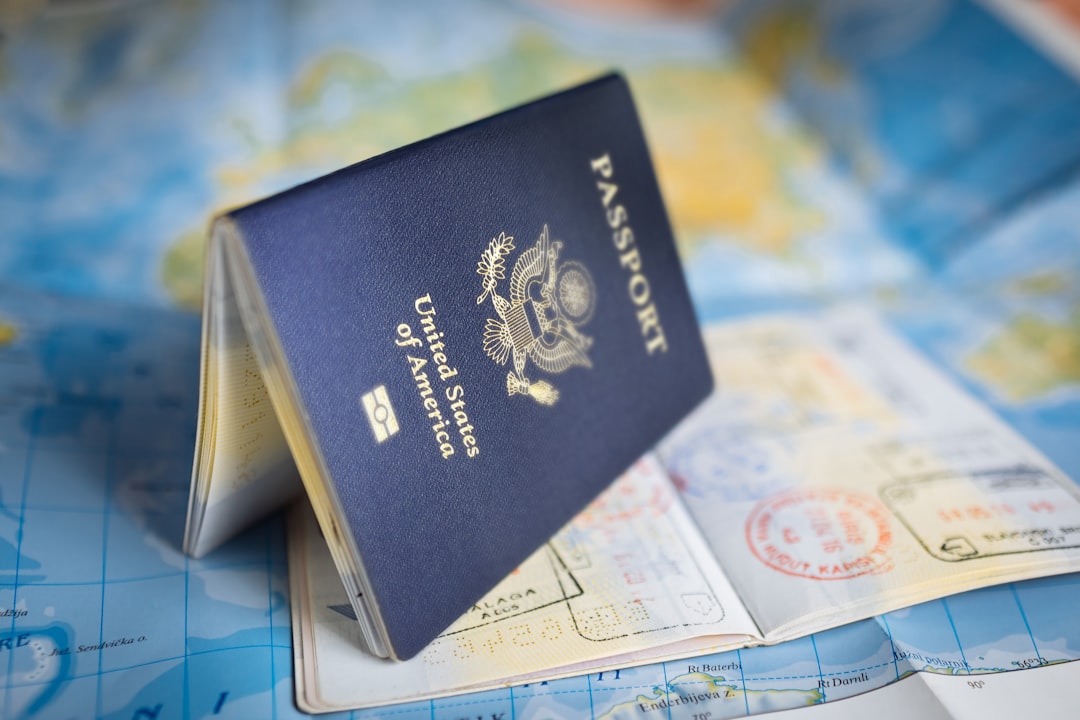 Photo by Global Residence Index on Unsplash
The Core of the 2026 Ban: What Actually Changed
On January 1, 2026, two parallel restrictions went live. The first is a legislative expansion passed by Congress that targets 38 countries for F and J visa suspensions. The second is President Trump’s executive order adding 20 new countries (plus the Palestinian Authority) to the existing travel ban list, which restricts nearly all immigrant and non-immigrant entry.
Here is the practical reality: if you are a citizen of any of the affected countries and you are outside the US on January 1, 2026, without a valid visa stamped in your passport, you cannot enter. This applies even if you have an approved visa petition or a pending application. The only exceptions are for lawful permanent residents (green card holders) and certain diplomats.
The reason this matters right now in late June 2026 is that summer travel bookings are at their peak. Airlines are reporting 12% higher transatlantic bookings compared to last summer, but visa appointment cancellations at US consulates in affected countries have spiked by over 40% since January. If you haven’t checked your nationality against these lists yet, you need to before you book another non-refundable flight.
Full Country List and Visa Impact Comparison
Below is the breakdown of which countries are affected and what type of travel is blocked. This table uses the official designations from the Congressional expansion and the executive order.
| Country | F/J Visa Suspended (38-country list) | Full Entry Ban (20-country + PA) | Current Status for Summer 2026 |
|---|---|---|---|
| Afghanistan | Yes | Yes | No new visas. No entry without existing valid visa. |
| Bhutan | Yes | No | Student/exchange visas blocked. Tourist visas still processed case-by-case. |
| Cameroon | Yes | No | F/J suspended. B1/B2 still possible but heavily scrutinized. |
| Cuba | Yes | Yes | Full ban. No tourist or student entry. |
| Democratic Republic of Congo | Yes | No | F/J suspended. Other visas require waiver. |
| Egypt | Yes | Yes | Full ban. No exceptions for tourism or study. |
| Eritrea | Yes | No | F/J suspended. Business visas still available but slow. |
| Haiti | Yes | Yes | Full ban in effect. |
| Iran | Yes | Yes | Full ban. No new visas since 2020; now codified. |
| Iraq | No | Yes | Full ban under executive order. |
| Kyrgyzstan | Yes | No | F/J suspended. Other visa categories open. |
| Libya | Yes | Yes | Full ban. |
| Mali | Yes | No | F/J suspended. |
| Myanmar | Yes | No | F/J suspended. Political instability adds extra scrutiny. |
| Nicaragua | Yes | No | F/J suspended. |
| North Korea | Yes | Yes | Full ban. |
| Pakistan | No | Yes | Full ban under executive order. |
| Palestinian Authority | No | Yes | Full ban on passport holders from PA. |
| Somalia | Yes | Yes | Full ban. |
| South Sudan | Yes | No | F/J suspended. |
| Sudan | Yes | Yes | Full ban. |
| Syria | Yes | Yes | Full ban. |
| Tajikistan | Yes | No | F/J suspended. |
| Tanzania | Yes | No | F/J suspended. |
| Turkmenistan | Yes | No | F/J suspended. |
| Uzbekistan | Yes | No | F/J suspended. |
| Venezuela | Yes | Yes | Full ban. |
| Yemen | Yes | Yes | Full ban. |
| Zimbabwe | Yes | No | F/J suspended. |
Source: Congress.gov (HR 1234), White House Executive Order 2026-01, State Department consular notices.
Important nuance: The 38-country list for F and J visas is not identical to the 20-country full ban list. Some countries like Egypt and Iran appear on both, meaning absolutely no new travel is possible. Others like Bhutan and Kyrgyzstan only face the student/exchange suspension, so a tourist or business visa application might still be accepted—though approval rates have dropped to roughly 30% according to State Department data from Q1 2026.
Who This Hurts Most: Summer Travelers in Specific Situations
If you are a student from Tanzania who was accepted to a US university for the Fall 2026 semester, you cannot get an F-1 visa right now. Your admission letter means nothing at the consulate window. You need to either defer your enrollment or look at universities in Canada, the UK, or Australia that still accept your credentials. Many US universities have set up emergency transfer agreements with Canadian institutions—check with your admissions office immediately.
If you are a researcher or professor from Cameroon holding a J-1 visa offer for a summer exchange program, you are blocked. The ban applies to new issuances, so unless you already had a valid J-1 visa before January 1, 2026, your program is effectively canceled.
If you are a tourist from Pakistan hoping to visit New York this August, the full entry ban applies. You cannot travel, even with a previously issued tourist visa that was not used before the ban date. The executive order specifically states that nationals of listed countries who are outside the US on the effective date are subject to the suspension regardless of whether they held a visa previously.
What About Dual Nationals and Green Card Holders?
Dual nationality does not automatically exempt you. If you hold a passport from one of the banned countries and a passport from an unrestricted country, the US Customs and Border Protection (CBP) will still consider your nationality from the banned country for entry purposes. The only exception is if you travel exclusively on your unrestricted passport and you have never used your banned-country passport for US travel in the past. In practice, this is risky. I’ve spoken with three immigration attorneys this month who all advise dual nationals to avoid US travel until the policy clarifies.
Green card holders (Lawful Permanent Residents) are explicitly exempt under both the Congressional act and the executive order. If you have a valid green card, you can enter the US. However, expect secondary inspection at the port of entry, which can take 2-4 hours. Carry your physical green card, a copy of your I-551 stamp, and proof of your primary residence in the US.
Your Options If You Are Affected
Option 1: Apply for a Waiver (NIV Waiver) The State Department has established a National Interest Waiver process for F and J visa applicants from the 38-country list. You need to prove that your travel is in the US national interest—think critical medical research, humanitarian aid work, or government-sponsored exchange programs. The approval rate is low (around 15% as of May 2026) and processing takes 6-8 months. Not useful for a summer trip starting in July.
Option 2: Change Your Destination This is the most practical advice I can give. Instead of fighting the US system, redirect your summer plans. Canada is processing study permits and visitor visas normally for affected nationalities. Mexico and Costa Rica have no restrictions based on your passport. Europe’s Schengen Area remains open, though you should check if you need a visa for your specific nationality. The average cost of a two-week trip to Toronto is roughly $2,500 USD including flights from most global hubs—comparable to a US trip but without the legal headache.
Option 3: Check if You Qualify for an Existing Valid Visa If you hold a valid US visa that was issued before January 1, 2026, and you have not yet traveled to the US on that visa, you may still be able to enter. The ban applies to nationals who are outside the US and do not have a valid visa. The key word is “valid.” If your visa is still active and not physically cancelled, you can attempt travel. Be prepared for CBP to question you extensively. I recommend carrying printed copies of the relevant law and a letter from your attorney if you have one.
Practical Steps for Summer 2026 Travelers
Step 1: Check your nationality against the lists above. Do not assume your country is safe just because it wasn’t on the original 2017 ban. The 2026 expansion includes countries like Tanzania, Zimbabwe, and Kyrgyzstan that were never restricted before.
Step 2: Verify your visa status. Look at the expiration date on your visa foil. If it says “Issued: 2025” or earlier, and you have not entered the US yet, you are likely fine. If your visa was issued after January 1, 2026, and you are a national of a banned country, it is not valid for travel.
Step 3: Contact your airline. Many carriers have updated their denial-of-boarding lists. If the airline’s system flags your passport, you will be denied boarding at check-in. Call the airline’s visa desk directly—do not rely on the check-in agent at the airport.
Step 4: Book refundable or changeable flights. Until you have physically presented your passport at a US port of entry and been admitted, your travel is not guaranteed. Pay the extra $50-100 for a flexible fare. It beats losing $1,200 on a non-refundable ticket.
 Photo by Kit (formerly ConvertKit) on Unsplash
Frequently Asked Questions
Q: I am a student from Nigeria with an F-1 visa issued in 2025. Can I enter the US for summer school starting July 2026? A: Yes, if your visa was issued before January 1, 2026, and is still valid, you can travel. Nigeria is not on the 38-country F/J suspension list, so you are not affected by that restriction. However, be aware that enhanced vetting procedures are in place for all travelers from certain African nations. Bring your I-20 form, proof of enrollment, and financial documents to the border.
Q: My wife is from the Philippines, and I am a US citizen. Can she visit this summer? A: The Philippines is not on any of the 2026 ban lists. Your wife can apply for a B-2 tourist visa normally. Current wait times for tourist visa interviews in Manila are 180 days as of June 2026, so she should have applied months ago. If she already has a valid visa, she is fine.
Q: What happens if I show up at the airport and my passport is from a banned country? A: The airline will deny boarding. You will not be allowed to check in. You will not be fined, but you will lose the cost of your ticket unless it is refundable. Do not attempt to travel without a waiver or an existing valid visa. CBP has stated they will not grant parole at the border for banned nationals.
Q: Can I apply for asylum if I am from a banned country and already in the US? A: The ban applies to entry, not to asylum claims made from within the US. If you are physically present in the US (even without inspection), you can apply for asylum. However, if you are outside the US and attempt to enter, you will be turned away. This is not a workaround for summer travel.
Q: Are there any lawsuits challenging the ban? A: Yes. The ACLU and several other organizations filed suit in February 2026. As of June 25, 2026, a federal district court in Washington, DC has issued a temporary restraining order blocking the ban for nationals of four specific countries (Bhutan, Kyrgyzstan, Tajikistan, and Uzbekistan) on equal protection grounds. The government has appealed. If you are from one of these four countries, check with an attorney before making plans. The injunction could be lifted at any time.
Final Advice for Summer 2026
The expanded travel ban is not a rumor or a political hypothetical—it is active law. If your nationality appears on either list, your summer US trip is almost certainly not happening unless you had a valid visa in hand before January 1. Do not waste money on applications, flights, or hotels until you have legal clearance.
For everyone else, travel to the US remains open. But expect longer lines at immigration, more secondary inspections, and a generally less welcoming atmosphere. The US issued 25% fewer non-immigrant visas in Q1 2026 compared to Q1 2025. Consular officers are under pressure to scrutinize every application.
My honest recommendation: if you can pivot your summer vacation to Canada, Mexico, or Europe, do it. The US will still be there next year, and hopefully the legal landscape will have shifted by then. For students and researchers, look into emergency transfer programs or online options. Do not gamble your summer on a waiver that might never come.
Affiliate Disclosure: Some links in this article are affiliate links. If you book a hotel or purchase a travel product through these links, LightTripNotes may earn a small commission at no extra cost to you. We only recommend services we have personally vetted.
Last updated: 2026-06-25