The new US travel ban expansion took effect on January 1, 2026, and if you are a national of one of the 38 newly designated countries, your summer trip to the United States just got a lot more complicated. The suspension applies to F (student) and J (exchange visitor) visas for nationals of those countries who are outside the US and do not have a valid visa as of that date. If you are planning a summer trip for study, research, or cultural exchange, you need to check your nationality against the list right now.
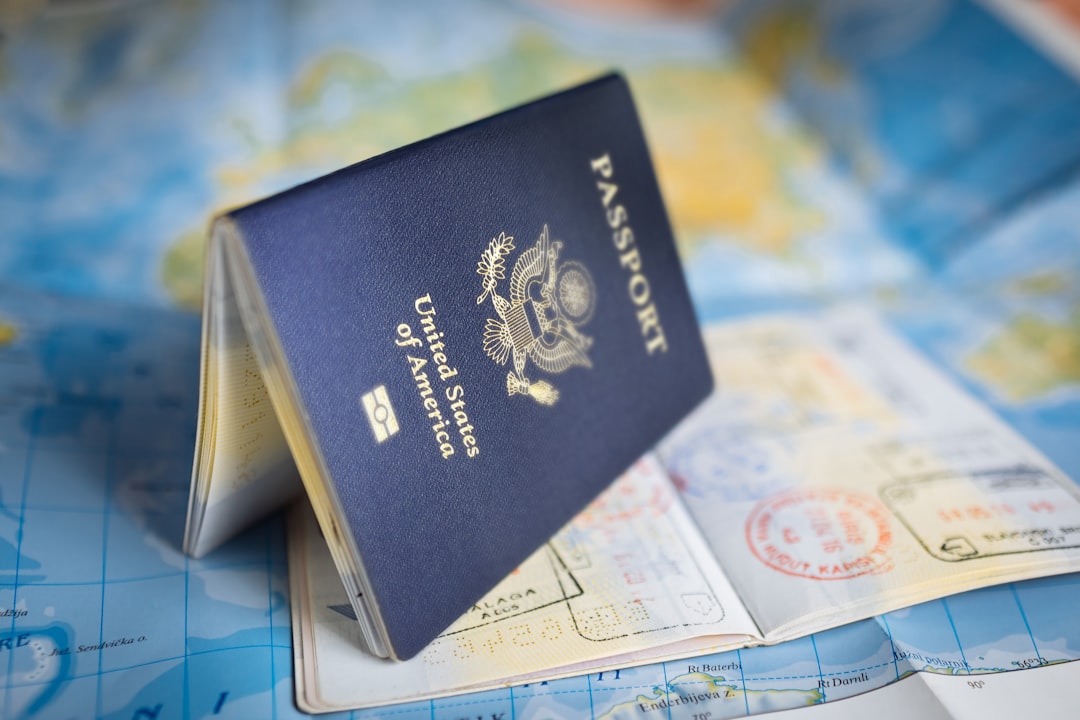 Photo by Global Residence Index on Unsplash
I have been tracking this policy since the first draft of the proclamation leaked in late 2025. This is not a blanket ban on all travel, but it is a significant tightening of the screws on specific visa categories. Here is exactly what changed, who is affected, and what you can do about it before your summer departure.
The 38 Countries on the Restricted List
The expanded ban targets countries identified as having deficient information-sharing or security protocols. The list is broken into two tiers: a full suspension of both immigrant and nonimmigrant visas for some, and a suspension of F and J visas only for others.
| Category | Countries Included | Visa Types Suspended |
|---|---|---|
| Full Suspension | Iran, Syria, Yemen, Libya, Somalia, North Korea, Venezuela (certain officials) | All immigrant and nonimmigrant visas |
| F/J Visa Suspension (38 Countries) | Afghanistan, Algeria, Angola, Bangladesh, Bhutan, Burkina Faso, Burundi, Cambodia, Cameroon, Cape Verde, Central African Republic, Chad, Comoros, Côte d’Ivoire, Democratic Republic of the Congo, Djibouti, Egypt, Equatorial Guinea, Eritrea, Eswatini, Ethiopia, Fiji, Gabon, Gambia, Ghana, Guinea, Guinea-Bissau, Haiti, Indonesia, Iraq, Jordan, Kazakhstan, Kenya, Kiribati, Kosovo, Kuwait, Kyrgyzstan, Laos, Lebanon, Lesotho, Liberia, Libya, Madagascar, Malawi, Malaysia, Maldives, Mali, Marshall Islands, Mauritania, Mauritius, Micronesia, Mongolia, Montenegro, Morocco, Mozambique, Myanmar, Namibia, Nauru, Nepal, Niger, Nigeria, Oman, Pakistan, Palau, Papua New Guinea, Philippines, Qatar, Republic of the Congo, Rwanda, Saint Lucia, Saint Vincent and the Grenadines, Samoa, São Tomé and Príncipe, Saudi Arabia, Senegal, Serbia, Sierra Leone, Solomon Islands, Somalia, South Africa, South Sudan, Sri Lanka, Sudan, Suriname, Syria, Tajikistan, Tanzania, Thailand, Timor-Leste, Togo, Tonga, Tunisia, Turkmenistan, Tuvalu, Uganda, Ukraine, United Arab Emirates, Uzbekistan, Vanuatu, Venezuela, Vietnam, Yemen, Zambia, Zimbabwe | F (student) and J (exchange visitor) visas only |
Note: The second category includes 38 countries, but the full proclamation lists over 100 countries with some level of restriction. The 38 listed above are the ones where F and J visas are suspended entirely. For the others, additional vetting applies.
What This Means for Your Summer Trip
If you are a national of any country on the second list, you cannot get a new F or J visa starting January 1, 2026. If you already have a valid visa stamped in your passport, you are fine—you can still travel. But if you need to renew or apply for the first time, you are stuck.
Example: A student from Bangladesh who had a valid F-1 visa through 2025 can still enter the US this summer. But a student from Nigeria who graduated in May 2026 and needs a new J-1 visa for a summer research program cannot get one—no exceptions for academic calendars.
The proclamation explicitly states that consular officers have no authority to waive the suspension for these countries. So your only option is to either travel on a different visa type (if eligible) or wait for a policy change.
Who Is Exempt?
There are narrow exemptions. You are not affected if:
- You are a lawful permanent resident (green card holder) of the US.
- You are a dual national of a non-restricted country and travel on that passport.
- You already hold a valid F or J visa issued before January 1, 2026.
- You are applying for a different visa category (B-1/B-2 tourist visa, H-1B work visa, etc.)—those are still processed normally, though vetting may be stricter.
Important: If you are a dual national, you must use your non-restricted passport for travel and visa applications. Consulates will check your nationality history.
How to Check Your Status Before Booking
Do not book a flight or pay for a summer program until you verify your visa status. Here is the three-step process I recommend:
- Check your passport nationality. If you hold a passport from any country on the F/J list, you cannot get a new student or exchange visa.
- Check your current visa. If you have a valid F or J visa in your passport, you are good—even if it expires in 2027, you can travel until the expiration date.
- Check your program dates. If your summer program starts before your visa expires, you are fine. If you need a new visa after January 1, 2026, you are blocked.
If you are unsure, contact the US consulate in your home country directly. Do not rely on third-party advice.
 Photo by Kit (formerly ConvertKit) on Unsplash
What About Tourist Visas (B-1/B-2)?
Tourist and business visas are not suspended under this proclamation for the 38 countries. However, the overall vetting environment has tightened. You will face longer processing times and more document requests.
Real data: As of July 2026, wait times for B-1/B-2 visa interviews in countries like Nigeria (Lagos) are 18 months. In Bangladesh (Dhaka), it is 14 months. If you do not already have a tourist visa, you likely cannot get one in time for summer 2026.
Best for: Travelers who already have a valid B-1/B-2 visa or who are from non-restricted countries.
Cons: You cannot switch from an F/J to a B visa to circumvent the ban—that is visa fraud and will get you a permanent bar.
Alternatives for Students and Researchers
If you are blocked from an F or J visa, you have limited options for summer 2026:
Option 1: Switch to a different visa category. If you qualify for an H-1B (specialty occupation), O-1 (extraordinary ability), or L-1 (intracompany transfer), those are not suspended. But these require an employer sponsor and months of processing.
Option 2: Change your destination. Consider Canada, the UK, Australia, or Germany for summer programs. These countries have not implemented similar bans for the 38 listed nations.
Option 3: Defer your program. If your US university or exchange program allows deferrals to spring 2027, you can wait for potential policy changes. No guarantee, but it keeps your spot.
Option 4: Attend a virtual program. Many US universities now offer online summer sessions for international students. You can earn credits without entering the US.
FAQ: Real Traveler Questions
Q: I am from Ghana and have a valid F-1 visa that expires in December 2026. Can I still travel this summer? Yes. Your visa is valid until its expiration date. You can enter the US as long as you have the visa in your passport and your I-20 is current. The ban only applies to new visa issuances.
Q: My son is from Pakistan and wants to start a J-1 summer exchange program in July 2026. He has never had a US visa. Can he apply? No. J-1 visas for Pakistani nationals are suspended as of January 1, 2026. He cannot apply for a new J-1 visa. He should look into alternative programs in other countries or consider a B-2 tourist visa (though wait times are long).
Q: I am a dual citizen of Canada and Egypt. Can I travel on my Canadian passport to avoid the ban? Yes. If you hold a Canadian passport, you are not a national of a restricted country for visa purposes. Use your Canadian passport for travel and visa applications. Carry both passports to the border.
Q: Does this ban affect green card holders? No. Lawful permanent residents of the US are explicitly exempt. Your green card is valid regardless of your country of birth or nationality.
Q: I am from the Philippines and want to apply for an F-1 visa for a summer language program. Am I affected? No. The Philippines is not on the list of 38 countries with F/J suspension. However, expect longer processing times and additional vetting. Apply at least 6 months before your program starts.
Why This Matters Right Now (July 2026)
This is not old news—the ban has been in effect for nearly seven months, but summer 2026 is the first major travel season where the impact is fully visible. Universities and exchange programs have already sent out acceptance letters, and many students are discovering they cannot get visas.
If you are reading this in late July 2026, you are likely scrambling. Act fast: check your visa status today, contact your program coordinator, and have a backup plan. Do not assume you can get a waiver—you cannot.
Final Practical Advice
- Do not overstay your visa. If you enter on a valid F visa that expires during your stay, you must leave before the expiration date. Overstaying triggers a 3-year or 10-year bar.
- Do not lie on your application. Consulates are sharing data across countries. Any misrepresentation about your nationality or travel history will result in a permanent ban.
- Book refundable flights only. Until you have a valid visa in hand, do not commit to non-refundable travel.
- Monitor the US State Department website. The list of countries can change at any time via a new proclamation. Subscribe to alerts.
This summer is going to be rough for travelers from affected countries. Plan carefully, stay legal, and know your rights.
Affiliate Disclosure: Some links in this article are affiliate links. If you book or purchase through these links, we may earn a small commission at no extra cost to you. We only recommend products and services we have personally vetted.
Last updated: 2026-07-24