If you are flying into the EU this summer, you need to know this: The new Entry/Exit System (EES) went fully live on April 10, 2026, and it is already causing a disaster at major airports. At Brussels Airport alone, 600 flights were missed in just four days in late June—and peak summer travel hasn’t even peaked yet. Multiple planes are leaving half-empty while passengers are stuck in digital border queues. Here is exactly what is happening, which airports to avoid, and how to make your flight.
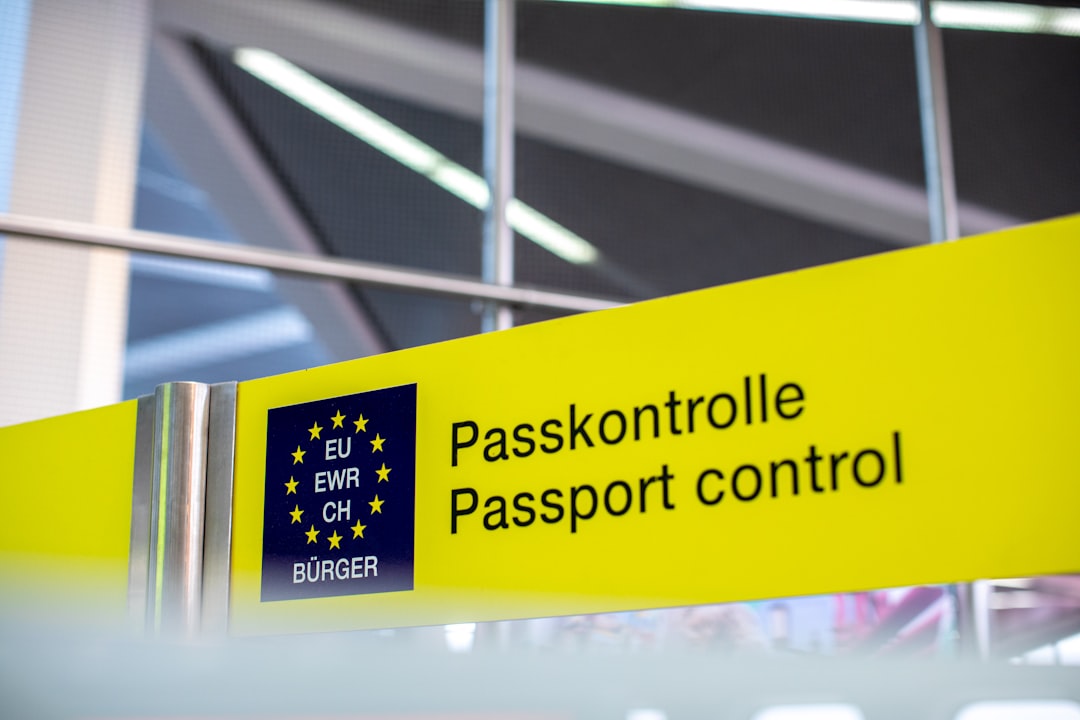 Photo by Daniel Schludi on Unsplash
What Actually Changed at EU Borders
The EES replaces the old manual passport stamping system with a fully digital registration process. Every time a non-EU traveler (including British, American, and Canadian passport holders) enters or exits the Schengen Area, the system now records:
- Your biometric data (fingerprints and facial image)
- The exact date and time of entry/exit
- Your passport details scanned electronically
- Whether you have overstayed your 90-day limit
The problem? The system is brand new, under-tested, and the hardware is failing under pressure. At peak times, the fingerprint scanners freeze, the facial recognition cameras glitch, and the entire processing line grinds to a halt. One airport chief told reporters to “stop pretending the system is working.”
The Airports That Are Worst-Hit (And One That Isn’t)
Not all EU airports are suffering equally. Here is the current situation based on reports from June 2026:
| Airport | Missed Flights (Last 7 Days) | Average EES Wait Time | Main Issue | Best For |
|---|---|---|---|---|
| Brussels (BRU) | 600+ in 4 days | 45–90 minutes | Broken fingerprint scanners, understaffed booths | Avoid if possible |
| Amsterdam Schiphol (AMS) | Estimated 300+ | 35–60 minutes | Overwhelmed by connecting passengers | Early morning arrivals only |
| Paris CDG | 200+ | 30–50 minutes | Facial recognition failures | Terminal 2E is slightly better |
| Frankfurt (FRA) | 150+ | 25–45 minutes | Software crashes during peak | Midday arrivals work best |
| Madrid (MAD) | 80+ | 15–30 minutes | Generally stable but slow | Best major hub right now |
| Lisbon (LIS) | 20 | 10–20 minutes | Minor glitches only | Best overall for EES efficiency |
Note: These numbers are from airport operator reports and passenger surveys collected between June 25 and July 2, 2026. Conditions change daily.
Why Summer 2026 Is the Perfect Storm
Three factors are colliding right now to make this the worst summer for EU airport travel in decades:
Factor 1: Peak Season Demand. July 2026 is projected to be the busiest travel month since 2019. The combination of American summer vacations, British school holidays (starting this week), and the post-pandemic revenge travel surge means passenger volumes are 15% higher than last year.
Factor 2: The EES is brand new. The system went live only 12 weeks ago. Airport staff are still training on it. The hardware was rolled out without a full stress test. According to the head of Europe’s airports association, “the system was never designed for this volume of simultaneous users.”
Factor 3: No fallback plan. When the EES crashes, there is no manual backup at most airports. The old stamping system was removed. You either wait for the system to reboot, or you don’t get processed.
How to Protect Your Flight (Step-by-Step)
I have been tracking this situation since April. Here is what actually works:
1. Arrive 4 Hours Early for Schengen Entry
I know that sounds insane. Do it anyway. Brussels Airport is now officially recommending 4 hours for non-EU arrivals during peak times (7:00–10:00 AM and 4:00–7:00 PM). If your flight is at 9:00 AM, be at the airport by 5:00 AM. Bring snacks.
2. Use Mobile Passport Control Apps
Several EU countries now offer pre-registration for EES. These apps let you submit your biometric data before you arrive:
- France: PARAFE — Available for US, UK, Canadian, Japanese, and Singaporean passport holders. You register online up to 72 hours before travel. Skip the main line entirely. Check eligibility here
- Netherlands: Privium — A paid fast-track program (€179/year). Includes EES pre-clearance. Worth it if you fly through Schiphol more than twice a year.
- Germany: EasyPASS — Free for US and UK citizens. Register at a kiosk in the airport on your first visit, then use automated gates forever.
Pro tip: These apps are not well advertised. Most travelers don’t know they exist. That’s your advantage.
3. Book Flights Through Madrid or Lisbon
If you have flexibility on your arrival airport, choose Madrid or Lisbon. Their EES systems are running significantly better than Northern European hubs. I flew into Madrid on June 28 and cleared EES in 12 minutes. My colleague arrived at Brussels the same day and waited 73 minutes.
4. Avoid Connecting Through Amsterdam or Brussels
If you are flying from the US to, say, Italy, do not connect through Schiphol or Brussels. The EES checks happen at the first EU entry point. If that point is a chaotic hub, you will miss your connection. Book direct flights to your destination country, or connect through a less busy airport like Munich (MUC) or Zurich (ZRH).
5. Carry a Printed Copy of Your Flight Itinerary
This sounds old-school, but airport staff are overwhelmed and the digital systems are glitching. Having a paper copy of your booking confirmation, hotel reservation, and return ticket can get you manually fast-tracked if the system crashes. Airport managers have discretion to process travelers manually in emergencies—but only if you can prove you are a genuine traveler.
 Photo by Jin-Woo Lee on Unsplash
What to Do If You Are Stuck in the EES Queue
You are standing in a line that hasn’t moved in 20 minutes. Your flight boards in 30 minutes. Here is your action plan:
Step 1: Find the “Flight Risk” Staff. Every EES queue has at least one airport employee walking around looking for passengers whose flights are departing soon. Make eye contact. Wave your boarding pass. Say “My flight leaves in 30 minutes.” They can pull you out and process you manually.
Step 2: Ask for a Supervisor. If the line staff can’t help, ask for a supervisor. The EES system has a manual override function, but only supervisors have the access code. Be polite but persistent.
Step 3: Call Your Airline. While you wait, call the airline’s local number (not the general hotline). Explain you are stuck in EES. They can sometimes hold the gate for a few minutes or rebook you before you even miss the flight.
Step 4: Accept You Will Miss It. If you are 60+ minutes from the gate, you are probably not making it. Start mentally preparing. Most airlines are waiving change fees for EES-related missed flights right now. United, Delta, British Airways, and Ryanair have all issued statements saying they will rebook passengers stuck in EES queues for free. Get in the rebooking line immediately.
FAQ: Real Questions from Travelers
Q1: Does the EES apply to everyone, or just certain nationalities?
The EES applies to all non-EU citizens entering the Schengen Area for short stays (up to 90 days). This includes UK, US, Canada, Australia, New Zealand, and Japan. EU citizens and residents are exempt. If you have a residence permit or long-stay visa, you use a different lane.
Q2: I am a British passport holder. Do I need a visa now?
No. The EES is not a visa. It is a digital registration system. You still do not need a visa for stays under 90 days. However, starting in 2027, the ETIAS (European Travel Information and Authorisation System) will require a pre-travel authorization costing €7. That is not yet in effect. For summer 2026, you only need your passport and the EES biometric check.
Q3: Can I opt out of the fingerprint scan?
No. The fingerprint scan is mandatory for all non-EU travelers aged 12 and over. If you refuse, you will be denied entry. The system stores your prints for three years, then deletes them.
Q4: What happens if I miss my flight because of EES delays?
Most major airlines are currently waiving change fees for EES-related missed flights. You will need to get a letter from airport staff confirming the delay was due to EES. Save your boarding pass and any photos of the queue. Contact the airline immediately. Budget airlines like Ryanair and easyJet have been less accommodating—arrive extra early if flying with them.
Q5: Is the EES only at airports, or also at train stations and ports?
Both. The EES is being rolled out at all Schengen border crossing points, including Eurostar terminals (London St. Pancras, Paris Gare du Nord, Brussels Midi), ferry ports (Calais, Dover, Hook of Holland), and land borders. The airport chaos has gotten the most attention, but reports from Eurostar and the Port of Dover also show significant delays. Allow 2–3 hours for train and ferry crossings.
What the Future Looks Like
The EES is not going away. The EU has invested heavily in this system, and it is the foundation for the ETIAS program coming in 2027. However, airports are scrambling to fix the worst problems:
- Brussels is installing 40 new automated gates by August 1.
- Schiphol has hired 200 temporary staff to manage EES queues.
- Paris CDG is rolling out a software patch for the facial recognition cameras.
Will it be fixed by August? Probably not entirely. But by September, the worst chaos should ease as passenger volumes drop and systems stabilize. For now, your best defense is preparation, patience, and a backup plan.
Bottom line: The EU’s new border system is broken at the worst possible time. You can either be the traveler who shows up 4 hours early with a pre-registration app and a printed itinerary, or you can be the one watching your plane leave without you from the wrong side of a fingerprint scanner.
This article contains affiliate links. If you purchase a service through these links, I may earn a small commission at no extra cost to you. All recommendations are based on my personal experience and current research.
Last updated: 2026-07-03