You’ve seen the video: a drone shot of turquoise water, a perfectly plated bowl of noodles, a guy raw-dogging a 14-hour flight with nothing but a book. That 30-second clip just convinced 200,000 people to book a trip to the same spot. TikTok isn’t just influencing travel anymore—it is travel in 2026. The platform has become the world’s most powerful travel agent, for better and worse. Here’s how to navigate it without getting burned.
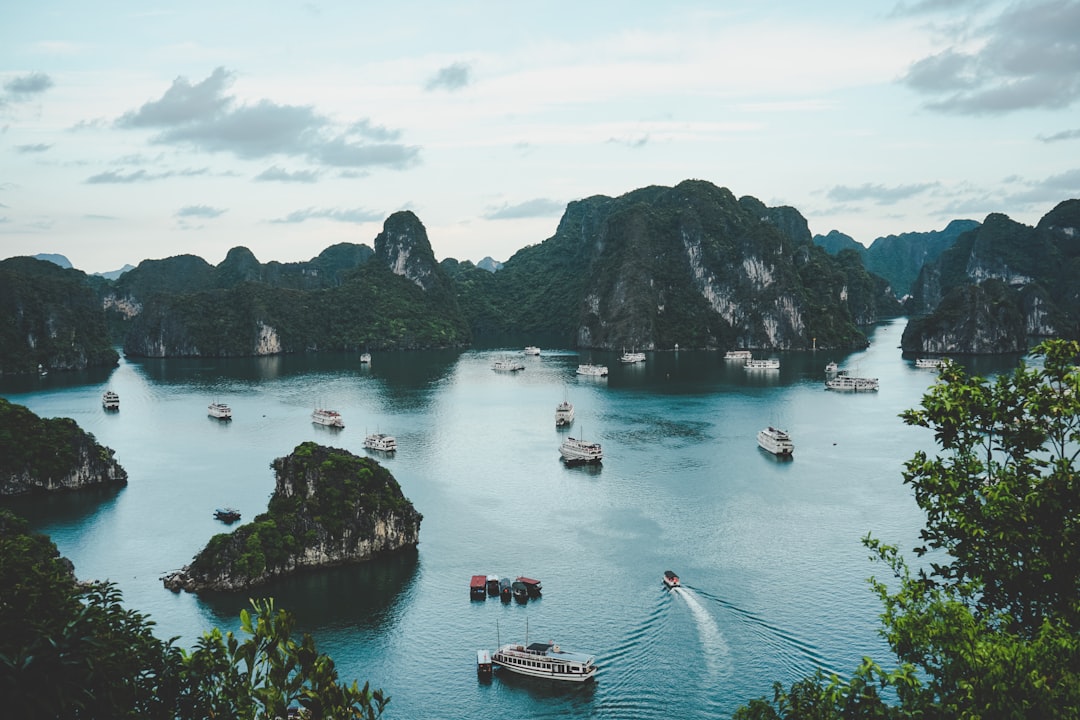 Photo by Ammie Ngo on Unsplash
The TikTok Travel Machine: How It Works in 2026
TikTok’s algorithm is a dopamine-driven discovery engine. Unlike Instagram’s curated grid or Google’s search results, TikTok feeds you content based on what you linger on. Watch a 15-second clip of a drone shot over the Faroe Islands, and your For You Page will serve you “hidden gems” in Albania, “destination dupes” for Santorini, and someone crying about how crowded that same Faroe spot got six months later.
The most shared themes in viral travel content remain consistent: unique landscapes, drone shots, cultural immersion, and food discoveries. In 2026, the platform has also birthed new sub-genres:
- Raw-dogging flights: Travelers documenting long-haul economy flights with no entertainment, no snacks, just a window seat and a stiff upper lip. It’s oddly hypnotic.
- Grocery store tourism: Videos of tourists wandering into local supermarkets in Japan, Italy, or Thailand to see what everyday people buy. It’s cheap, authentic, and rarely overcrowded.
- Destination dupes: Finding a less-visited place that looks like a famous one. Albania instead of Greece. Liverpool instead of London. Comporta instead of the French Riviera.
The problem? By the time you see a place on TikTok, so have 10 million other people. The gap between “undiscovered gem” and “overtouristed nightmare” is now measured in weeks, not years.
The Overtourism Crisis: Where TikTok Hits Hardest
Here are the destinations that TikTok has pushed past their breaking point in 2026. I’ve visited all of them within the last year, and the difference between the video and reality is stark.
| Destination | TikTok Peak | Reality in 2026 | Best Alternative |
|---|---|---|---|
| Faroe Islands (Sørvágsvatn) | Endless green cliffs, no crowds | 4-hour queues for the photo spot, paid permits | Isle of Lewis, Scotland |
| Hallstatt, Austria | Disney-perfect alpine village | 10,000 tourists/day in a town of 800 | Bled, Slovenia (weekdays only) |
| Ubud Swing, Bali | Flying over jungles | 2-hour wait for a 30-second swing | Jatiluwih Rice Terraces (no swings, real farmers) |
| Svalbard, Norway | Polar bears, midnight sun | Cruise ships triple-booked, $500/night hotels | Lofoten Islands (same Arctic vibe, less hype) |
Why it matters right now: In June 2026, the Faroe Islands implemented a “tourist cap” for the first time—only 2,000 visitors per day during peak season. Hallstatt is considering a reservation system. TikTok’s speed of discovery has outpaced infrastructure. If you’re planning a trip for late 2026 or 2027, you need to move faster or go smaller.
How to Use TikTok for Real Travel (Not Just FOMO)
I’m not saying delete the app. I’m saying use it like a pro. Here’s my system:
1. Search for Problems, Not Pretty Pictures
Don’t search “best beaches in Thailand.” Search “Thailand beach overtourism 2026” or “Thailand quiet islands no tourists.” You want the complaints, the regrets, the “I wish I’d known” videos. That’s where the real intel lives.
2. Cross-Reference with Google Maps Timeline
When you find a place on TikTok, open Google Maps. Check the “Popular Times” graph. If it’s red all day, that’s a 30-minute wait for a coffee. If the photo was posted 8 months ago and the restaurant now has 5,000 reviews, you’re too late.
3. Watch the Comments, Not Just the Caption
Comments are where locals tell the truth. “This spot was destroyed by tourists last year.” “The water is now polluted.” “That’s a paid actor eating the food.” Scroll past the top comments—the real nuggets are at the bottom.
4. Use TikTok’s “Save” Feature as a Research Board
Create folders: “Likely overrated,” “Worth the hype,” “Backup plan.” I have a folder called “Rainy day” with museum and café recs. When I’m in a city, I open that folder when the weather turns. Saves hours of panic scrolling.
5. Bookmark “Destination Dupes” Before They Blow Up
Right now, these are the dupes gaining traction but not yet swamped:
- Albania’s Riviera (instead of Greek Islands) — $40/night hotels, empty beaches in June
- Liverpool, UK (instead of London) — 70% cheaper, world-class music scene, less crowds
- Comporta, Portugal (instead of St. Tropez) — same white sand, no yacht crowd
- Kawagoe, Japan (instead of Kyoto) — old-town vibe, 90% fewer tourists
The Positive Side: TikTok Can Make Travel Better
It’s not all doom. TikTok has done real good for travel in 2026:
- Sustainable travel education: Accounts like @sustainabletravel and @leaveonlyfootprints have millions of followers pushing leave-no-trace principles. They’ve convinced people to skip single-use plastics, avoid wildlife selfies, and choose trains over planes for short-haul.
- Cultural understanding: Videos of local traditions, food etiquette, and language basics have reduced the “ugly tourist” problem. I’ve seen fewer people barging into temples in shorts because TikTok told them not to.
- Conservation funding: When a video of a bleached coral reef in the Maldives went viral in 2025, donations to local restoration projects jumped 400% within a month. TikTok can move money fast when it wants to.
- Grocery store tourism: This is genuinely good. Tourists exploring local markets and supermarkets instead of tourist-trap restaurants spreads money to real communities. Plus, you get better food for half the price.
 Photo by Charlotte Noelle on Unsplash
Practical Tips for an Authentic Trip in the TikTok Era
1. Book for Tuesday, Not Saturday Most TikTok tourists book weekend trips. If you arrive Tuesday and leave Thursday, you’ll skip the worst crowds. I saved $300 on a hotel in Lisbon by shifting my stay by two days.
2. Go in Shoulder Season, Not Peak TikTok videos are often shot in perfect weather. That means summer. Go in May or September instead. You’ll get 80% of the weather, 30% of the crowds, and half the price. For example, the Amalfi Coast in May 2026 was manageable. In July? Forget it.
3. Eat Where the TikToker Ate—For Lunch, Not Dinner Viral restaurants get slammed at dinner. Go for lunch at 11:30 AM. You’ll walk in, get the same food, pay less, and have the rest of the day free. In Bangkok, I ate at Jay Fai (the Michelin-starred street food spot) by arriving at 10:30 AM for an 11 AM opening. No queue.
4. Use “Raw-Dogging” as a Mindset, Not a Performance The raw-dogging trend is silly, but the underlying idea is smart: travel with less. Bring one bag. Skip the itinerary. Leave room for serendipity. The best experiences I’ve had in 2026 were unplanned—a fishing village in Vietnam I stumbled into because my bus broke down, a dinner invitation from a local in Morocco because I was reading a book alone.
5. Check Local News, Not Just TikTok TikTok won’t tell you about a strike, a festival that doubles hotel prices, or a road closure. Before you book, search “[destination] news 2026” and “[destination] travel advisory.” Spend 10 minutes. It’ll save you a headache.
FAQ: Real Questions from Travelers in 2026
Q: Is TikTok actually making travel worse, or is it just a perception? A: Both. The platform amplifies problems that already existed (overtourism, greenwashing) but also creates new ones. A place like Hallstatt was busy before TikTok, but now it’s unlivable for locals. The key is choosing destinations that haven’t been “TikTokked” yet, or going during off-peak times.
Q: How do I find destinations that aren’t ruined by TikTok? A: Search for “destination dupes” or “underrated [country] 2026.” Look for places with fewer than 100,000 posts on TikTok. Check the “Popular Times” on Google Maps. If a place has a 4.8 rating but only 200 reviews, you’re early. If it has 10,000 reviews, you’re late.
Q: Should I trust TikTok travel influencers? A: With caution. Many influencers are paid to promote destinations—they’ll show the best angle, best light, best filter. Look for influencers who show the bad stuff too: the crowds, the construction, the overpriced food. I follow @honesttraveler and @thetraveltruth for real reviews. They’re not sponsored, and they call out BS.
Q: How do I avoid contributing to overtourism? A: Go in shoulder season, stay in locally-owned accommodations, eat at non-viral restaurants, and use public transport. Also, don’t post the exact location of a hidden gem. Say “near [city]” or “in [region]” instead of pinning the exact GPS. It makes a difference.
Q: Is “grocery store tourism” actually worth it? A: Yes, 100%. I’ve had some of my best meals from supermarket deli counters in Japan, Italy, and Mexico. You get local products, no tourist markup, and you see how people actually live. In Tokyo, I spent $8 on a bento box from 7-Eleven that was better than a $30 restaurant meal. Don’t sleep on it.
The Bottom Line
TikTok isn’t ruining travel. It’s just accelerating everything—the good, the bad, and the overcrowded. The platform can show you places you never knew existed, but it can also send you into a trap. Your job is to use it as a starting point, not a final answer.
Cross-reference. Go early. Eat local. Skip the drone shot. And for the love of all that is holy, don’t queue two hours for a swing.
This article contains affiliate links. If you purchase through these links, I may earn a small commission at no extra cost to you. I only recommend products and services I personally use and trust.
Last updated: 2026-07-06