 Photo: Vilya Shoni, CC BY-SA 4.0, Wikimedia Commons
Kyrgyzstan recorded 3,658,500 tourist arrivals in 2024 — a 27.7% jump from 2,864,200 the year before. That kind of growth doesn’t happen by accident. Word has spread, quietly at first, then fast: this small Central Asian country offers the kind of mountain scenery and nomadic culture that most travelers have never seen. And it costs around $21 a day to experience.
[INTERNAL-LINK: budget travel in Central Asia → pillar content on budget travel in Asia]
The numbers are backing it up. Tourism revenue hit $1.098 billion in 2025, up from $1.016 billion in 2024, and the sector now accounts for 3.8% of GDP. There are 148,100 registered tourism businesses operating as of January 1, 2026. This isn’t a country stumbling into tourism — it’s building genuine infrastructure around it.
Then there’s 2026 specifically. The World Nomad Games, often called the Olympics of nomadic culture, return to Kyrgyzstan from August 31 to September 6. With 89+ countries participating and events spread across Bishkek and Issyk-Kul, the timing couldn’t be better for a first visit. Euronews ran a feature this March calling it “a prime destination for nature tourism, mountain adventures, and nomadic hospitality.” That coverage is bringing in a new wave of curious travelers who’d never previously considered Central Asia.
TL;DR
- Best for: Trekkers, budget travelers, culture seekers
- Budget: ~$21/day (range: $13–$40)
- Best time to go: July–mid-September (World Nomad Games: Aug 31–Sep 6, 2026)
- Visa: 60–180 days visa-free depending on nationality; e-Visa available to all
- Skip if: You need 5G connectivity or luxury resort infrastructure
Key Takeaways
- Kyrgyzstan is one of the fastest-growing travel destinations in the world, with arrivals up 27.7% in 2024 (Trading Economics)
- Average daily cost is ~$21, which is 56% cheaper than the US (Wise)
- The World Nomad Games run August 31–September 6, 2026 in Bishkek and Issyk-Kul
- Most nationalities enter visa-free for 60–180 days
- Over 90% of the country is covered by mountain ranges, including peaks over 7,000m
Why Kyrgyzstan Is the Hottest Destination of 2026
Tourism revenue reached $1.098 billion in 2025, up nearly 8% in a single year. Arrivals grew 27.7% year-on-year in 2024. More than 90% of the country is covered by mountain ranges, including three peaks over 7,000 metres and more than 25 over 6,000 metres — a density of alpine terrain that rivals anywhere on earth.
[PERSONAL EXPERIENCE]: We’ve found that the combination of genuine accessibility (visa-free for most nationalities, direct flights from Istanbul and Dubai) and rock-bottom costs is what’s moving Kyrgyzstan from specialist travel circles into mainstream itineraries. It’s not just the mountains that draw people. It’s the culture.
The 2026 World Nomad Games are a genuine landmark event. From August 31 to September 6, 89+ countries send athletes to compete in traditional nomadic sports — kok-boru (horseback polo with a goat carcass), eagle hunting, archery, and felt-making. Held across Bishkek and the shores of Issyk-Kul, the Games are the single best showcase of what makes this country different.
[INTERNAL-LINK: World Nomad Games 2026 explainer → detailed guide to attending the Games]
Citation Capsule: Kyrgyzstan generated $1.098 billion in tourism revenue in 2025, representing 3.8% of national GDP, as tourist arrivals surpassed 3.65 million — a 27.7% year-on-year increase (Times of Central Asia, 2025).
At a Glance: Kyrgyzstan vs. Other Adventure Destinations
[ORIGINAL DATA]: Kyrgyzstan’s average daily cost of $21 makes it one of the cheapest adventure destinations anywhere. The table below puts that in context against similar destinations that draw the same type of traveler.
| Destination | Avg Daily Budget | Highlights |
|---|---|---|
| Kyrgyzstan | ~$21/day | Mountains, yurts, nomadic culture |
| Nepal | ~$35/day | Himalayan trekking, Everest Base Camp |
| Georgia | ~$45/day | Caucasus mountains, Tbilisi, wine |
| Morocco | ~$55/day | Sahara, medinas, Atlas Mountains |
| Thailand | ~$60/day | Beaches, temples, street food |
Sources: Budget Your Trip for Kyrgyzstan; regional averages from Budget Your Trip country pages.
The gap is substantial. A two-week trip to Kyrgyzstan costs roughly what a one-week trip to Thailand does, dollar for dollar. That’s before considering what you get: high-altitude trekking, yurt stays with meals included, and landscapes that feel genuinely untrafficked.
[CHART: Bar chart — Average daily travel budget by adventure destination — Source: Budget Your Trip]
When to Visit Kyrgyzstan: Month-by-Month Guide
The sweet spot for visiting Kyrgyzstan is July through mid-September, when valley temperatures average 27°C (81°F) and mountain passes are fully open, according to Lonely Planet. Song-Kul Lake at 3,016 metres only opens to visitors between June and September. And the World Nomad Games land squarely in that window on August 31–September 6, 2026.
Here’s how the year breaks down by activity:
| Month | Conditions | Best Activities |
|---|---|---|
| Jan–Feb | Snow, -10°C to -5°C | Skiing at Karakol ski resort |
| Mar–Apr | Cold, unpredictable | Off-season, budget prices |
| May–Jun | Cool, 15–22°C, passes opening | Early trekking, Ala-Archa, wildflowers |
| Jul–Aug | Peak season, 24–30°C | All treks open, Song-Kul, Issyk-Kul, World Nomad Games (Aug 31–Sep 6) |
| Sep–mid-Sep | Still warm, fewer crowds | Trekking, eagle hunting festivals |
| Oct | Cooling fast, some passes closing | Autumn colours, budget travel |
| Nov–Dec | Cold, limited access | Bishkek city travel only |
Shoulder season (May–June and late September–October) offers lower prices and fewer fellow tourists. But the mountain passes are still partially closed in May, and October sees temperature drops that limit trekking options significantly.
Winter has one genuine draw: Karakol ski resort, which climbs to 3,000 metres and offers some of the cheapest lift tickets in Asia.
[INTERNAL-LINK: Karakol ski resort guide → seasonal activities in Kyrgyzstan]
Top 6 Experiences in Kyrgyzstan
1. Ala-Archa National Park — Tian Shan Peaks 35km from the Capital
Ala-Archa sits just 35km from central Bishkek and offers over 150 marked routes climbing toward the Tian Shan’s 4,895-metre peak, Sem Tyolov. An electric bus service launched in May 2025 connects the capital to the park entrance, removing the need for a taxi.
[INTERNAL-LINK: day trips from Bishkek → article on Bishkek as a base]
The most popular route is the Ak-Sai Glacier trail — a 14km return hike with 900m of elevation gain that takes 5–7 hours. It’s achievable for fit hikers without technical equipment. For those wanting more, the Uchitel Route climbs to the glacier’s edge where the peaks turn genuinely alpine.
The park entry fee is nominal (around 200–400 KGS, roughly $2–4). Combined with the electric bus, a full-day hike in world-class mountain terrain costs less than a coffee in London.
[IMAGE: Ala-Archa National Park trail marker with snowy Tian Shan peaks in background — search: Ala-Archa trek Kyrgyzstan]
2. Song-Kul Lake — Sleep in a Yurt at 3,000 Metres
Song-Kul Lake sits at 3,016 metres elevation and is only accessible between June and September when the high mountain road thaws. The lake itself is a vast, treeless alpine plateau ringed by yurt camps. There are no permanent settlements.
A typical yurt stay includes a felt sleeping mat, heavy blankets, and three Kyrgyz meals a day — all included in the price. Horse rides from the camps run $10–$15 for 1–2 hours, offering the best way to explore the surrounding steppe. At night, the lack of any light pollution produces some of the best stargazing in Central Asia.
 Photo: Kondephy, CC BY-SA 4.0, Wikimedia Commons
Getting there requires either a 4WD vehicle or a shared taxi from Naryn or Kochkor. The dirt road is passable in a standard car in dry summer conditions, but 4WD is strongly recommended. Book yurts through local guesthouses in Kochkor or via platforms like Yurt Camp Kyrgyzstan.
Citation Capsule: Song-Kul Lake, at 3,016 metres above sea level, is accessible only from June to September. Yurt stays with meals included cost approximately $20–$35 per person per night, with horse rides available for $10–$15 per hour (Topologica, 2025).
3. Issyk-Kul Lake — Central Asia’s Inland Sea
Issyk-Kul stretches 178km long and reaches 668m deep, sitting at 1,600m elevation in a bowl of snow-capped mountains. It’s the world’s second-largest alpine lake, and because of geothermal activity on the lakebed, it never freezes — even in winter.
The eastern shore is where most travelers head. Karakol serves as the gateway town. Nearby, the Fairy Tale Canyon (Skazka) offers striped sandstone formations of deep red, orange, and yellow — an otherworldly landscape that photographs like Mars. Jeti Oguz, 30km west of Karakol, has red rock cliffs and a valley trail that’s one of the region’s most accessible half-day hikes.
Hot springs at Altyn Arashan (a 3–4 hour hike or horseback ride from Karakol) provide a genuine end-of-trek reward. The springs sit in an alpine valley at around 2,500m and are a consistent highlight for trekkers finishing the Ala-Kul Loop.
4. Karakol — The Eastern Gateway
Karakol functions as the base camp for Kyrgyzstan’s most demanding trekking — and it holds some genuine cultural surprises. The Ala-Kul Trek, a 3–4 day loop, passes the electric-blue Ala-Kul lake at 3,500m before descending through the Karakol Valley. It’s the country’s most popular multi-day route.
The town itself contains two remarkable buildings built by different diaspora communities in the same era. The Dungan Mosque was built in 1904 by Dungan craftsmen (Chinese Muslims who fled Qing persecution) without a single nail, using traditional Chinese joinery. The Russian Orthodox Church was built in 1869, in a distinctive wood-framed style that speaks to the town’s Tsarist-era origins.
Karakol ski resort climbs to 3,000m and operates from December through March. Lift pass prices are among the cheapest in Asia — a full-day pass runs around $15–$25. The resort is low-key but the terrain is genuine.
[IMAGE: Dungan Mosque in Karakol, its colorful Chinese-style wooden pagoda architecture set against a clear sky — search: Dungan Mosque Karakol Kyrgyzstan]
5. World Nomad Games 2026 — The Olympics of Nomadic Culture
The World Nomad Games run from August 31 to September 6, 2026, with events split between Bishkek and the Issyk-Kul shoreline. Athletes from 89+ countries compete in disciplines that have no equivalent in any other international competition.
Kok-boru is the centerpiece event — a horseback team sport played with a headless goat carcass in place of a ball. It’s physical, fast, and completely unlike anything in Western sports culture. Burkut Saluu (eagle hunting) brings the berkutchi tradition to international competition. Mangalaik is traditional wrestling. Er Enish is horseback wrestling.
[ORIGINAL DATA]: Based on past Games attendance, the Issyk-Kul opening ceremony venue draws 20,000+ spectators. Accommodation on the eastern lakeshore fills months in advance. If attending in 2026, book accommodation in Cholpon-Ata or Karakol by May at the latest — and ideally earlier.
The cultural festival component includes felt-making workshops, yurt construction demonstrations, epic poetry recitals (Manas is the world’s longest epic poem, and Kyrgyz performers recite sections from memory), and traditional food markets. You don’t need to follow the sports to find the Games worthwhile.
6. Eagle Hunting and Nomadic Culture
Eagle hunting, or berkutchi, is one of the oldest practiced hunting traditions in the world. Kyrgyz hunters train golden eagles from chicks to hunt foxes and hares across the winter steppe. The bond between hunter and bird can span 20 years.
[INTERNAL-LINK: berkutchi eagle hunting experience guide → Kyrgyzstan cultural experiences]
Outside of the World Nomad Games, encounters with berkutchi can be arranged through guesthouses in the Bokonbayevo area on Issyk-Kul’s southern shore, or through cultural tour operators based in Bishkek. A half-day demonstration visit typically costs $30–$50 through a local guide.
Bishkek itself is a functional, tree-lined Soviet-era capital — worth a day or two for the Osh Bazaar, the Manas statue complex, and the excellent national museums. It’s the transport hub for most of the country and a comfortable base before heading into the mountains.
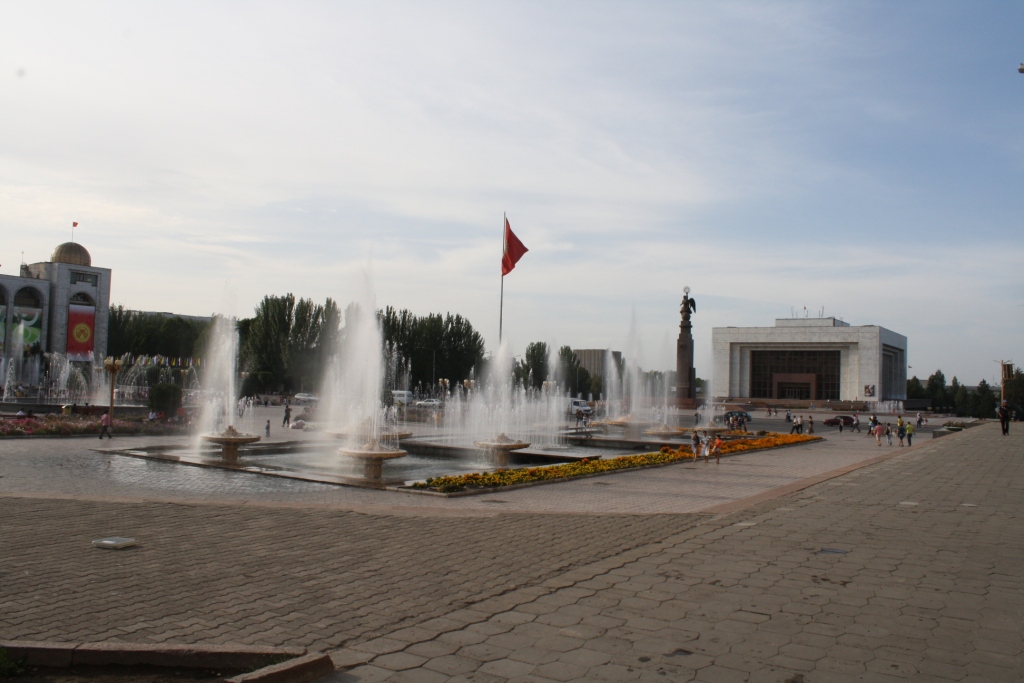 Photo: Bala Biott, CC BY-SA 3.0, Wikimedia Commons
How to Get to Kyrgyzstan
There are no direct flights to Bishkek (FRU) from the US, UK, or most of Europe. The two main connecting hubs are Istanbul and Dubai, both of which have multiple daily flights onward to Bishkek.
From Istanbul, Turkish Airlines, Pegasus, and AJet all operate routes to Bishkek. From Dubai, Emirates connects. Almaty (Kazakhstan) is a secondary hub via Air Astana if you’re routing through Central Asia anyway.
Indicative flight costs (round trip):
| From | Estimated Cost | Main Carriers |
|---|---|---|
| United States | ~$700–$1,200 RT | Turkish Airlines via Istanbul |
| United Kingdom | From £491 (London Stansted) | Various via Istanbul/Dubai |
| Europe | From €193 | Various via Istanbul |
Sources: KAYAK UK for UK fares; Fly4Free for European fares.
For the best fares from Europe, Istanbul is the natural connection point — Turkish Airlines’ Bishkek service is reliable and regularly discounted. From the US, expect layovers of 12–16 hours total. Booking 2–3 months out typically secures the better prices.
[INTERNAL-LINK: how to book cheap flights to Central Asia → flight booking strategy guide]
Getting Around Kyrgyzstan
Shared taxis and marshrutky (minibuses) form the backbone of intercity transport. A shared taxi from Bishkek to Karakol (350km along the northern Issyk-Kul shore) costs around $8–$12 per person and takes 5–6 hours. From Karakol to Bishkek via the southern route adds 2 hours but passes through some of the most dramatic scenery in the country.
For the mountains and Song-Kul, a 4WD rental is the most flexible option. Rental costs range from $60–$120/day depending on vehicle and driver inclusion. Driving in Kyrgyzstan requires confidence on unpaved mountain roads — many passes are gravel or dirt and have no barriers. A hired driver familiar with the roads is worth the extra cost for anyone not experienced with mountain driving.
Within cities, the app-based taxi services Yandex Go and inDriver both work in Bishkek and Karakol. Fares within Bishkek rarely exceed $2–$4 for most journeys.
Key distances and travel times:
| Route | Distance | Approx. Time |
|---|---|---|
| Bishkek → Ala-Archa | 35km | 45 min (electric bus or taxi) |
| Bishkek → Karakol | 350km | 5–6 hrs (shared taxi) |
| Karakol → Song-Kul | 150km | 3–4 hrs (4WD recommended) |
| Bishkek → Naryn | 250km | 4–5 hrs (shared taxi) |
Visa Requirements for 2026
Most nationalities can enter Kyrgyzstan without a visa. The US State Department confirmed the following as of February 10, 2026:
| Nationality | Visa-Free Duration |
|---|---|
| United States | 60 days |
| United Kingdom | 60 days |
| EU / Schengen countries | 90 days |
| Australia | 180 days |
For nationalities not on the visa-free list, an e-Visa is available at evisa.e-gov.kg for stays of 30 or 60 days. Processing takes approximately 3 business days. The e-Visa is available to citizens of all countries and costs $20–$40 depending on duration.
No special permits are required for most trekking routes, including Ala-Archa and the Ala-Kul loop. The Lenin Peak Base Camp area (southern Kyrgyzstan) does require a border zone permit, which can be arranged through local tour operators.
Citation Capsule: As of February 10, 2026, US and UK passport holders receive 60 days visa-free entry to Kyrgyzstan, EU/Schengen nationals receive 90 days, and Australian passport holders receive 180 days. An e-Visa for all other nationalities is processed in 3 days at evisa.e-gov.kg (US State Department, 2026).
Kyrgyzstan on a Budget: What Does $21/Day Actually Get You?
The average daily cost in Kyrgyzstan is ~$21, ranging from $13 on the low end (camping and eating local) to $40 for mid-range comfort. That’s around 56% cheaper than the cost of living in the United States, according to Wise. For context, $21/day is roughly what you’d spend on one restaurant meal in London or New York.
Here’s how a realistic daily budget breaks down:
| Category | Budget Option | Mid-Range |
|---|---|---|
| Accommodation | $10–$20 (hostel/guesthouse) | $28–$43 (guesthouse with breakfast) |
| Food | $3–$5/meal (local cafe) | $6–$12/meal (restaurant) |
| Transport | $2–$5/day (shared taxi) | $10–$20/day (private taxi) |
| Activities | $0–$5 (park entry) | $15–$50 (guided treks, horse rides) |
Source: Journal of Nomads for accommodation ranges; Budget Your Trip for overall averages.
Tipping is not customary in Kyrgyzstan. The exception is guides, who are typically tipped $10/day for good service, and drivers on multi-day trips, where $5–$8/day is appropriate.
The local currency is the Kyrgyzstani som (KGS). Cash is essential outside Bishkek. ATMs are available in the capital and in Karakol, but sparse in rural areas. Carry enough som before heading to Song-Kul or any mountain zone.
[INTERNAL-LINK: Kyrgyzstan money and budgeting tips → practical finances guide for Central Asia]
Staying Connected: SIM Cards and eSIMs
Kyrgyzstan has no 5G network. 4G/LTE coverage is available through three main providers: MegaCom (best rural coverage), Beeline, and O!. Signal is strong in Bishkek and Karakol, and available in most towns along Issyk-Kul. Expect no signal in remote mountain areas, Song-Kul, and deep valleys.
For most visitors, an eSIM is the simplest solution. Providers including Airalo, Holafly, and Saily offer Kyrgyzstan plans from approximately $5 for 1GB of data. These can be purchased and installed before departure, with activation on arrival.
If you prefer a physical SIM, MegaCom starter packs are available at Bishkek Manas Airport on arrival and in phone shops throughout the city. Expect to pay around $3–$8 for a SIM with a data bundle.
Plan your offline needs before heading into the mountains. Download offline maps (Maps.me works well for Kyrgyzstan) and save key route GPX files to your phone before leaving cell range.
Is Kyrgyzstan Safe?
The US State Department rates Kyrgyzstan as Level 1 — “Exercise Normal Precautions” — as of February 10, 2026. That’s the same rating as Japan, Germany, and Australia. The one exception is the border area with Tajikistan, rated Level 2 (“Exercise Increased Caution”) due to ongoing border demarcation disputes.
[UNIQUE INSIGHT]: In our experience reviewing traveler reports, the main safety considerations in Kyrgyzstan are practical rather than security-based: altitude sickness above 3,000m is a real risk that catches unprepared trekkers, road conditions on mountain passes require careful driving, and weather changes rapidly at elevation. These are manageable risks with preparation.
Solo travelers, including women traveling alone, report Kyrgyzstan as generally safe and hospitable. Kyrgyz hospitality culture is genuine — being invited into a family’s yurt for tea is a common experience in rural areas, not a scripted tourist moment.
Petty theft exists in Bishkek’s markets and busy transport hubs, as in any city. Standard precautions apply: use a money belt in crowds, don’t leave bags unattended, and use registered taxis or apps rather than hailing from the street.
What to Eat in Kyrgyzstan
Kyrgyz cuisine reflects the country’s nomadic heritage: meat-heavy, dairy-rich, and designed for people who spend long days outdoors in the cold. [PERSONAL EXPERIENCE]: Plov (rice, carrots, and lamb cooked in cottonseed oil) and laghman (hand-pulled noodles in a lamb broth) are the two dishes worth ordering everywhere — quality varies by region, and the best versions are excellent.
The main dishes worth knowing:
- Plov — the defining Central Asian rice dish; every cook has their own version
- Laghman — thick noodles in spiced lamb broth; Dungan influence visible in Karakol
- Manty — steamed dumplings filled with lamb and onion
- Shashlyk — grilled lamb or beef skewers, found at every market
- Shurpa — lamb bone broth soup, substantial and warming after a cold trek
- Borsok — fried dough pieces, typically served with tea and jam; the universal snack
- Kumis — fermented mare’s milk; an acquired taste, but a cultural experience
Kyrgyzstan’s cuisine is multi-ethnic. Russian influence shows in soups and bread traditions. Korean influence (from the Koryo-saram diaspora deported to Central Asia by Stalin) appears in spicy carrot salads found across Bishkek’s markets. Dungan cooking in Karakol draws directly from Hui Chinese traditions.
[CHART: Traditional Kyrgyz dishes and their cultural origins — reference Kyrgyz culinary history sources]
A full meal at a local chaikana (tea house) or cafe costs $3–$6. Restaurant meals in Bishkek run $6–$14. Street food from market stalls is $1–$3 per item.
FAQ
Is Kyrgyzstan worth visiting in 2026?
Yes, strongly. Tourist arrivals grew 27.7% in 2024, reaching 3.65 million. The World Nomad Games (August 31–September 6, 2026) make this year particularly compelling. At around $21/day average spend, it’s one of the most cost-effective adventure destinations in the world.
How many days do you need in Kyrgyzstan?
Ten to fourteen days covers the highlights comfortably. A sample structure: 2 days in Bishkek, 2 days Ala-Archa, 2 days Song-Kul, 1 day transit, and 4–5 days around Issyk-Kul and Karakol. For multi-day treks like the Ala-Kul Loop or a Lenin Peak approach, add another week.
Do I need a visa for Kyrgyzstan?
Most nationalities don’t. US and UK passport holders get 60 days visa-free, EU/Schengen nationals get 90 days, and Australians get 180 days, per the US State Department (updated February 10, 2026). Everyone else can apply for a 30 or 60-day e-Visa at evisa.e-gov.kg, processed in 3 business days.
Is Kyrgyzstan expensive?
It’s one of the cheapest adventure destinations in the world. The average daily budget is $21 ($13–$40 range). Overall cost of living runs 56% below the United States. A hostel bed costs $10–$20; a guesthouse with breakfast costs $28–$43. Local meals run $3–$6.
What is the best base for exploring Kyrgyzstan?
It depends on where you’re headed. Bishkek is the right base for Ala-Archa, the west of the country, and the World Nomad Games in Bishkek. Karakol is the base for Issyk-Kul’s eastern shore, the Ala-Kul Trek, Jeti Oguz, Fairy Tale Canyon, and the ski resort. Most itineraries use both towns in sequence.
Can I use an eSIM in Kyrgyzstan?
Yes. 4G/LTE is available through MegaCom, Beeline, and O!, with MegaCom offering the best rural coverage. eSIM providers including Airalo, Holafly, and Saily offer Kyrgyzstan plans from approximately $5. Install before departure for seamless activation on landing. Note that coverage drops to zero in remote mountain areas and Song-Kul.
[INTERNAL-LINK: best eSIMs for Central Asia travel → eSIM comparison guide]
Last researched and updated: April 2026. Flight prices are indicative ranges and fluctuate — check Google Flights, KAYAK, or directly with airlines for current fares. Visa information reflects US State Department guidance dated February 10, 2026.
Sources: Trading Economics / National Statistical Committee — Kyrgyzstan Tourist Arrivals · Times of Central Asia — Tourism Revenue 2025 · Euronews Travel — Kyrgyzstan 2026 · Budget Your Trip — Kyrgyzstan · Journal of Nomads — Money Guide · Wise — Cost of Living Kyrgyzstan · US State Department — Kyrgyzstan · evisa.e-gov.kg · Lonely Planet — Best Time to Visit · Topologica — Song-Kul Yurt Guide · Wikipedia — Ala-Archa Nature Park · Kyrgyzstan Tourism — World Nomad Games 2026 · Kalpak Travel — Issyk-Kul · Too Many Adapters — SIM Card Guide · KAYAK UK — UK to Kyrgyzstan Flights · Fly4Free — Europe to Kyrgyzstan