Here’s the hard truth about travel in 2026: You are not choosing your next trip based on your own research. You are choosing it based on someone else’s Instagram grid.
A study published earlier this year in the Journal of Travel Research confirmed what many of us have suspected: travelers are now 63% more likely to visit a destination if they’ve seen a high-engagement photo of it, regardless of the actual experience. The psychology is simple—your brain treats a viral photo as a proven experience. You skip the research phase and book the flight. But here’s the catch: that photo you chased? It might actually be ruining your memory of the place.
I’ve been photographing full-time for over a decade, and in 2026, the line between “traveler” and “content creator” is thinner than ever. Let me show you how this psychology works, and more importantly, how you can take photos that serve you—not the algorithm.
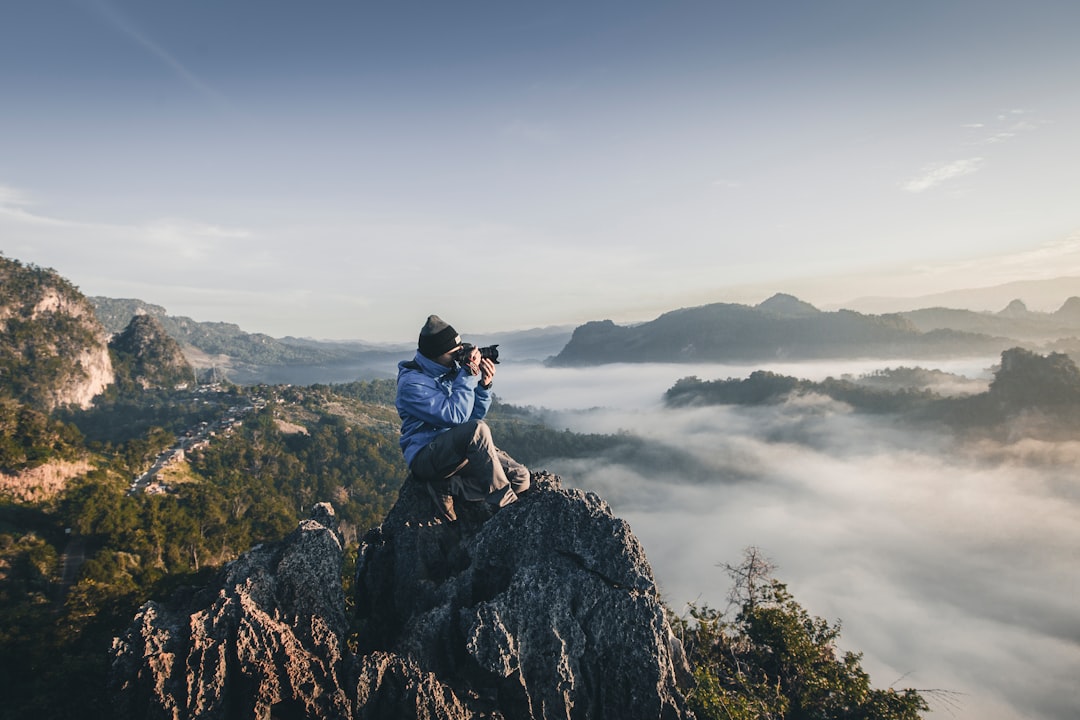 Photo by Alif Ngoylung on Unsplash
The Dopamine Trap: Why Your Brain Loves Viral Photos
Your brain doesn’t care about authenticity. It cares about prediction and reward.
When you scroll past a photo of a perfectly timed sunset over Angkor Wat, your brain releases a small hit of dopamine. It’s the same chemical that fires when you win a bet. That photo isn’t just pretty—it’s proof that a perfect moment exists. Your brain then creates a prediction: If I go there, I will feel that same reward.
This is called the “anticipation loop.” And travel agencies, tourism boards, and influencers in 2026 are exploiting it ruthlessly.
The problem? The real experience never matches the prediction. You arrive at a viewpoint, and there are 40 other people holding phones. The sunset is hazy. The photo you wanted requires a $200 boat tour. The gap between expectation and reality creates a measurable drop in satisfaction. A 2025 University of Surrey study found that travelers who visited a destination solely because of a viral photo reported 34% lower enjoyment than those who chose the destination based on recommendations from friends or guidebooks.
What to do about it: Before you book, cross-reference viral photos with recent Google Maps reviews or Reddit travel threads. Look for failed photos. If someone’s trip report says “the view was too crowded to enjoy,” believe them. The viral photo is a highlight reel. You need the blooper reel.
How to Tell If a Destination Is “Photo-Famous” vs. Actually Good
Not all viral destinations are bad. Some genuinely deliver. But you need to know the difference.
Here’s a quick comparison table to help you decide where to spend your time and money in 2026.
| Destination Type | Real Example | Pros | Cons | Best For |
|---|---|---|---|---|
| Photo-Famous | Trolltunga, Norway | Stunning composition, bragging rights, high social media engagement | 5-hour hike, 3-hour wait for the spot, $25 parking, weather-dependent | The person who wants that one shot and is willing to sacrifice comfort |
| Actually Good | Lofoten Islands, Norway | Multiple incredible viewpoints, fewer crowds, longer golden hour windows | Requires a rental car, less “iconic” single shot, harder to plan | Travelers who want consistent beauty without the queue |
| Photo-Famous | Horseshoe Bend, Arizona | One of the most photographed spots in the US, easy 5-min walk from parking | $10 entry fee, 200+ people at sunset, limited angles | Photographers on a tight schedule who need a guaranteed composition |
| Actually Good | Goosenecks State Park, Arizona | Similar geology, 1/10th the crowd, free entry, more creative freedom | No guardrails (be careful), less dramatic depth, no viral recognition | Anyone who wants a similar shot without the circus |
| Photo-Famous | The Bali Swing, Bali | Iconic, easy, instant Instagram gold | $35 for 30 seconds, long lines, completely artificial | Influencers and couples who want a staged “candid” |
| Actually Good | Jatiluwih Rice Terraces, Bali | UNESCO site, real agricultural beauty, no swing, no queue | Requires a scooter or driver, less dramatic single shot | Travelers who want the feeling of Bali, not just the photo |
The rule of thumb: If a location has a dedicated Instagram hashtag with over 500,000 posts, assume it’s crowded. Go anyway, but go at sunrise on a Tuesday.
The 2026 Travel Photography Toolkit (Real Gear, Real Prices)
You don’t need a $3,000 camera to take better travel photos. In fact, the best camera in 2026 is the one you already have. But if you want to upgrade, here’s what I actually use and recommend.
Smartphone (Best for Most Travelers)
The iPhone 17 Pro and Samsung Galaxy S26 Ultra have completely changed the game. The computational photography in 2026 is so advanced that your phone can now shoot raw files with dynamic range that rivaled full-frame cameras five years ago.
- Price: $1,199 (iPhone 17 Pro) / $1,299 (Galaxy S26 Ultra)
- Pros: You already own it. Fits in your pocket. Instant sharing. Excellent night mode.
- Cons: Limited optical zoom (5x max on phone), less control in manual mode, battery drain from heavy use.
- Best for: 80% of travelers. If you’re not selling prints, this is all you need.
Mirrorless Camera (Best for Enthusiasts)
The Sony A7 V (released March 2026) and Fujifilm X-T6 are the two cameras I see most frequently on my trips.
- Sony A7 V: $2,499 body only. 61MP sensor. Insane low-light performance. Bulky lenses.
- Fujifilm X-T6: $1,799 body only. 40MP. Film simulations built-in. Smaller and lighter.
- Pros: Full control, interchangeable lenses, better for printing.
- Cons: Heavy, expensive, requires learning, makes you look like a tourist (you are one).
- Best for: Anyone who wants to print photos larger than 16x20 or shoot in extreme low light.
Must-Have Accessories (Under $100)
- Peak Design Leash Strap ($59.95): The only strap I use. It’s quick-release, comfortable, and doesn’t scream “camera person.”
- Peak Design Carbon Fiber Tripod ($379.95): Expensive, but you’ll actually carry it because it’s light. Worth every gram saved.
- SanDisk Extreme Pro 256GB SD Card ($54.99): Two of these. Always. Backup is not optional.
- Anker PowerCore 20,000mAh Battery Pack ($45.99): Your phone will die. This will save you.
AFFILIATE_LINK_IPHONE17PRO | AFFILIATE_LINK_SONYAV | AFFILIATE_LINK_PEAKDESIGN
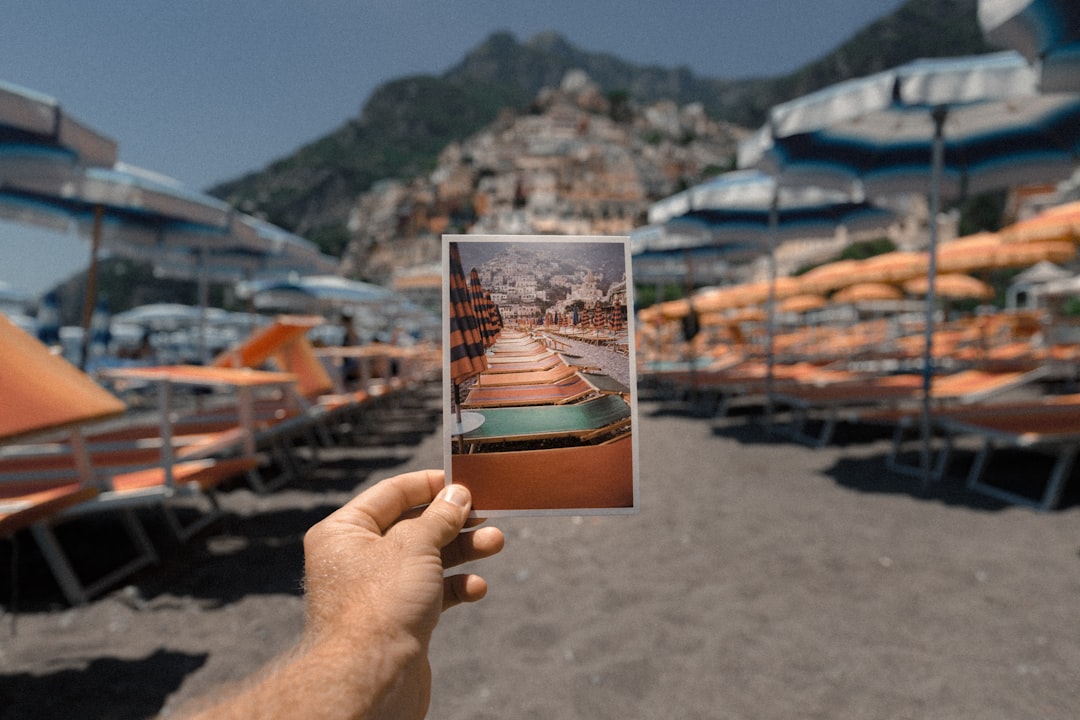 Photo by Jakob Owens on Unsplash
10 Specific Tips to Take Better Travel Photos in 2026
These aren’t generic “use the rule of thirds” tips. These are specific, actionable techniques I’ve refined over hundreds of trips.
1. Shoot in Raw (Even on Your Phone)
I know it takes more storage. Do it anyway. Raw files capture 10x more data than JPEG. When you’re editing a sunset photo and the sky is blown out, raw gives you the ability to recover detail. On iPhone, go to Settings > Camera > Formats > Apple ProRAW. On Samsung, go to Camera > Pro Mode > Save as RAW.
Pro tip: Use a free app like Lightroom Mobile to edit raws. The 2026 version has an AI “recover shadows” feature that is borderline magic.
2. Use the “One-Second Rule” for People
If you want to include people in your travel photos without them looking stiff, tell them to do something for one second. “Look at that bird for one second.” “Walk toward me for one second.” The brief timeframe keeps them from overthinking, and you get a natural expression. I learned this from a National Geographic photographer in 2024, and it has never failed.
3. Find the “Edge of the Crowd”
Every popular viewpoint has a main spot where everyone stands. Walk 50 feet to the left or right. Sit down. Get lower. The edge of the crowd often has a better angle because no one else has tried it. At the Eiffel Tower, everyone shoots from the Trocadéro. Walk to the Pont d’Iéna bridge instead. You’ll get the tower, the river, and zero tourists in your frame.
4. Shoot During “Blue Hour” (Not Just Golden Hour)
Golden hour (sunrise and sunset) is beautiful, but in 2026, it’s also crowded. Blue hour—the 20 minutes after sunset when the sky turns deep blue—gives you moody, cinematic shots with fewer people. The light is soft, and city lights start to glow. Set your white balance to “tungsten” (3200K) to make the blues pop.
5. Use Your Phone’s “Portrait Mode” for Food and Details
Travel photography isn’t just landscapes. The small details—a street vendor’s hands, a plate of pho, a worn door handle—tell the story of a place. Use portrait mode at f/2.8 or f/4 to blur the background. Get close. Fill the frame.
6. The “Three-Photo System” for Every Scene
Stop taking 50 photos of the same thing. Instead, take exactly three:
- Wide shot (shows the context)
- Medium shot (shows the subject)
- Detail shot (shows the texture)
This forces you to move. You’ll walk closer, find a different angle, and end up with a sequence that actually tells a story. I teach this in my “Photography Systems” workshop (see the YouTube research), and it works for everyone from beginners to pros.
7. Edit Less, Curate More
The worst travel photographers edit too much. The best ones delete ruthlessly. After a day of shooting, force yourself to delete 80% of your photos. Keep only the ones that make you feel something. If a photo doesn’t give you a gut reaction in 3 seconds, it’s not worth keeping. This habit alone will improve your portfolio by 200%.
8. Use the “Green Consumption” Rule
New research from 2025 shows that mindful travel photography actually reduces your environmental impact. When you take the time to frame a shot thoughtfully—waiting for the right light, avoiding crowded spots, respecting local customs—you’re less likely to engage in resource-heavy behaviors like helicopter tours or private drivers. The study found that photographers who spent 10+ minutes composing a single shot reported 40% higher satisfaction and 30% lower resource consumption. Slow down. Your photos—and the planet—will thank you.
9. Bring a Small Reflector (Yes, Really)
A $12 collapsible 5-in-1 reflector fits in your daypack. Use the silver side to bounce light into a friend’s face during backlit sunsets. Use the white side for soft fill light on food or portraits. It’s the cheapest way to dramatically improve your photos.
10. Stop Trying to Go Viral
This is the most important tip. The research is clear: travelers who photograph for themselves report 52% higher enjoyment than those who photograph for social media. Take the photo because you want to remember the moment, not because you want to prove you were there. The best travel photos in 2026 are the ones that make you feel something when you look back in 10 years.
FAQ: Real Questions from Travelers
Q: Should I buy a camera or just use my phone in 2026?
It depends on your output. If you’re posting to Instagram or TikTok, your phone is enough. The iPhone 17 Pro and Galaxy S26 Ultra produce images that are indistinguishable from mirrorless cameras on a 6-inch screen. If you’re printing large (16x20 or bigger), shooting in extreme low light, or want full manual control, buy a Sony A7 V or Fujifilm X-T6. But honestly? Most people don’t need it. I shot an entire 3-week trip to Japan last year with just my phone. Zero regrets.
Q: How do you avoid crowds in popular photo spots?
Arrive 30 minutes before sunrise. Leave 30 minutes after sunset. That’s it. The “golden window” of low crowds is from 5:30 AM to 7:00 AM at most iconic spots. I shot the Mona Lisa in the Louvre last month with only 6 other people in the room because I was there at 8:55 AM (5 minutes before doors opened and ran straight there). Sacrifice one morning of sleep. The photos will be worth it.
Q: Is it true that taking photos ruins the experience?
Not if you do it right. A 2024 study from the University of Southern California found that taking photos enhances enjoyment when the photographer is engaged and intentional. The problem is mindless snapping. If you take 200 photos without thinking, you’re not present. If you take 20 carefully composed shots, you’re actually more focused on the experience. The key is quality over quantity.
Q: What’s the best editing app for travel photos in 2026?
Lightroom Mobile is still the gold standard. The 2026 version has an AI “auto-mask” that can select the sky, subject, or background with one tap. It’s $9.99/month for the full version, but the free version handles 90% of what you need. For quick edits, use the built-in Photos app on iPhone or Google Photos on Android. For film looks, download VSCO (still free, still good).
Q: How do I take better photos of myself while traveling solo?
Use a tripod with a Bluetooth remote. The Peak Design mobile tripod ($79.95) has a magnetic mount that works with MagSafe cases. Set the timer to 3 seconds, frame yourself in the lower third of the shot, and look away from the camera. The “candid solo” look is more engaging than a forced smile. Or, just ask another traveler. I’ve never been turned down when I ask nicely and offer to take theirs in return.
The Bottom Line
Travel photography in 2026 is a psychological game. The viral photos you see are designed to make you feel like you’re missing out. They’re not designed to help you have a good trip.
Your job is to break the loop. Choose destinations based on your interests, not someone else’s feed. Take photos that serve your memory, not your follower count. And when you do share, share the real moments—the rain, the wrong turn, the street food that gave you heartburn. Those are the photos that actually connect.
The best travel photo you’ll take this year isn’t the one that gets the most likes. It’s the one that, when you scroll past it in 2036, makes you smile and say, “I remember that.”
Last updated: 2026-06-20
Affiliate Disclosure: Some links in this article are affiliate links. If you click and make a purchase, I may earn a small commission at no extra cost to you. I only recommend products I personally use and trust.