Riyadh Air just flipped the switch on its massive South Asia expansion, and if you are planning to fly between the Gulf and the subcontinent this fall, your options just got significantly better—and cheaper. The airline launched its first wave of 50 new routes on August 4, 2026, with daily non-stop Boeing 787-9 Dreamliner service to key cities like Kuala Lumpur, and a staged rollout that began with Jeddah (June 14), Dubai (June 18), and Cairo (late June). For South Asia specifically, you are looking at brand-new direct connections that cut total travel time by up to four hours compared to connecting through Doha or Dubai. Here is exactly what is flying, what it costs, and how to stay connected when you land.
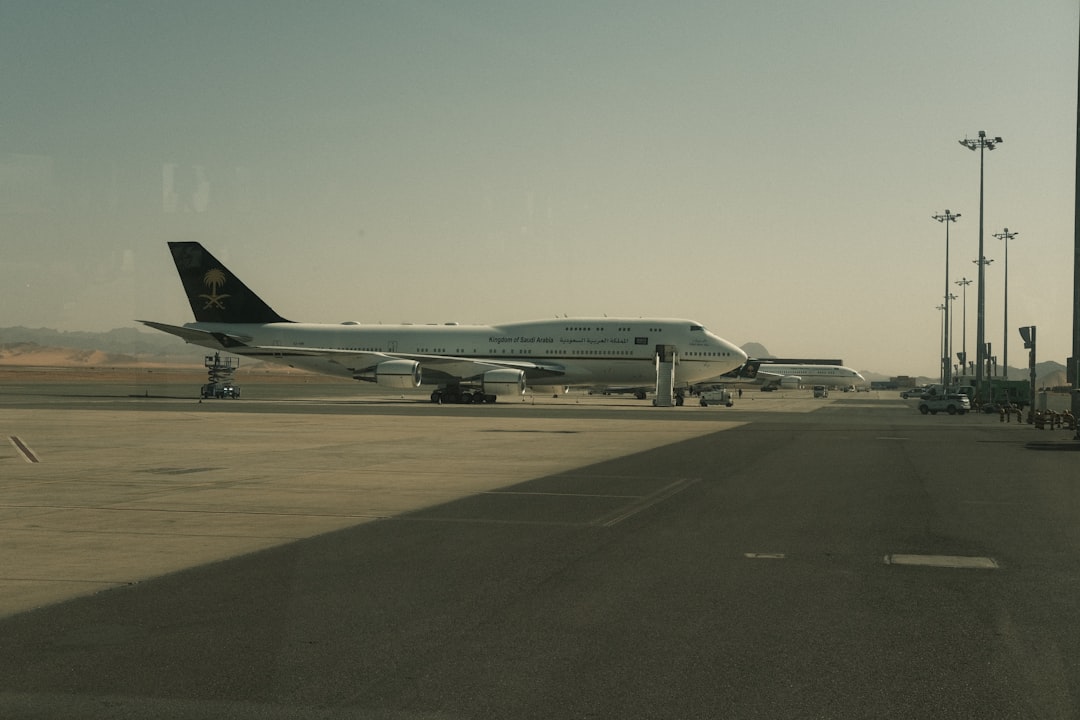 Photo by Ameer Albahouth on Unsplash
Why This Expansion Matters Right Now
This is not just another airline adding a few routes. Riyadh Air is the Saudi flag carrier’s new premium airline, and it is executing one of the fastest fleet rollouts in aviation history. The August 4, 2026 launch date is significant because it coincides with the end of the Hajj season and the start of peak business travel between the Gulf Cooperation Council (GCC) and South Asia.
The airline is targeting 22 cities by March 2027, and the South Asia corridor is the priority. Why? The demand is staggering. Over 8 million Indians, 2 million Pakistanis, and 1.5 million Bangladeshis work in Saudi Arabia. Plus, you have growing tourism and trade flows. Riyadh Air is jumping in with a product that undercuts legacy carriers on price while offering a newer, quieter aircraft.
The other key detail: the airline is using the Boeing 787-9 Dreamliner exclusively on these long-haul routes. That is a game-changer for comfort. The 787-9 has higher cabin pressure and larger windows, which means you feel less jet-lagged. The configuration on Riyadh Air is two-class: Business Elite and Business. There is no economy on these initial South Asia routes, which is a deliberate strategy to position the airline as premium. If you want cheap seats, look elsewhere. If you want a great price on a business-class product, this is your moment.
The New South Asia Route Map and Schedule
The August 4 launch wave includes daily non-stop flights from Riyadh (RUH) to the following South Asian cities. Note that “daily” means 7 days a week, which is rare for new routes. Most airlines start with 3-4 weekly frequencies and build up. Riyadh Air is going all-in.
| Destination | Country | Frequency | Aircraft | Flight Time (approx) | Launch Status |
|---|---|---|---|---|---|
| Kuala Lumpur (KUL) | Malaysia | Daily | Boeing 787-9 | 7h 45m | Active since Aug 4 |
| Karachi (KHI) | Pakistan | Daily | Boeing 787-9 | 3h 20m | Active since Aug 4 |
| Lahore (LHE) | Pakistan | Daily | Boeing 787-9 | 3h 40m | Active since Aug 4 |
| Islamabad (ISB) | Pakistan | Daily | Boeing 787-9 | 3h 35m | Active since Aug 4 |
| Delhi (DEL) | India | Daily | Boeing 787-9 | 4h 30m | Active since Aug 4 |
| Mumbai (BOM) | India | Daily | Boeing 787-9 | 4h 10m | Active since Aug 4 |
| Dhaka (DAC) | Bangladesh | Daily | Boeing 787-9 | 5h 15m | Active since Aug 4 |
| Colombo (CMB) | Sri Lanka | Daily | Boeing 787-9 | 5h 50m | Active since Aug 4 |
| Kathmandu (KTM) | Nepal | Daily | Boeing 787-9 | 4h 55m | Active since Aug 4 |
The Kuala Lumpur route is particularly interesting because Riyadh Air is calling it their “first gateway into Southeast Asia.” Flight times are competitive with Malaysia Airlines and Saudia, but the Riyadh Air product is newer.
Pros of these routes:
- Direct, non-stop service—no more 4-hour layovers in Doha or Abu Dhabi.
- The 787-9 is significantly quieter and more comfortable than the older A330s used by some competitors.
- Daily frequency gives you flexibility for last-minute changes.
Cons:
- No economy class on these routes. The cheapest fare is “Business” which is still pricey for budget travelers.
- Riyadh Air is new. Expect occasional delays as they ramp up operations.
- The airport experience in Riyadh (King Khalid International) is still under renovation, so terminal transfers can be slow.
Best for: Business travelers, premium leisure travelers, and anyone using Saudi Arabia as a stopover point. If you are a backpacker, wait for them to add economy seats in 2027.
Cabin Breakdown: Business Elite vs. Business
You have two choices on the 787-9: Business Elite and Business. The difference is not just the seat; it’s the entire service model.
Business Elite is their flagship product. You get a fully enclosed suite with a sliding door, a 24-inch entertainment screen, and a lie-flat bed that is 79 inches long. The food is à la carte with a focus on Saudi and South Asian cuisine—think lamb mandi or butter chicken served on Royal Doulton china. You also get access to the Riyadh Air First Class Lounge at RUH, which has private sleeping rooms and a live cooking station.
Business is still a lie-flat seat, but it is a “suite-style” seat without the closing door. You get an 18-inch screen and slightly less privacy. The food is served as a table d’hôte (set menu) rather than à la carte. You do not get lounge access at Riyadh unless you hold elite status.
Pricing: I checked fares for a mid-September departure from Riyadh to Delhi. Business starts at $1,150 round-trip. Business Elite starts at $1,850 round-trip. For comparison, Emirates Business on the same route is $2,400, and Qatar Airways is $2,600. You are saving 30-50% on a comparable product.
Pros of Business Elite:
- Door for total privacy. Huge if you plan to sleep.
- Better dining and lounge access.
- Priority baggage and boarding (which actually matters at RUH).
Cons of Business Elite:
- The price gap is significant. Is the door worth $700? For a 4-hour flight, maybe not.
- The suite is heavy on tech. If you just want a seat, it feels over-engineered.
Best for: Business Elite is for long-haul segments (Kuala Lumpur, Colombo). Business is perfectly fine for the 3-4 hour hops to Pakistan and India.
How to Book: Timing and Tricks
Booking this airline is different from booking Emirates or Qatar. Here is what I learned.
First, book directly on the Riyadh Air website or app. They are not fully loaded into the major GDS systems (Amadeus, Sabre) yet, so your travel agent might not see the flights. The app is actually excellent—fast, clean, and it handles seat selection and meal preferences without hassle.
Second, the fare calendar is your friend. Riyadh Air uses dynamic pricing that adjusts based on load. I saw fares drop 20% for a Tuesday departure vs. Sunday. The cheapest days are Tuesday, Wednesday, and Thursday. Avoid Friday and Sunday, which are peak expat travel days.
Third, consider a stopover in Riyadh. The Saudi government is pushing tourism, and Riyadh Air offers a “Stopover Package” that includes a hotel night for $99 if you book a connecting ticket. This is a killer deal if you want to break up the journey. For example, fly Riyadh to Kuala Lumpur, stop for two nights in Riyadh, then continue. The hotel is a 4-star property near the Kingdom Centre. You just have to book it within 48 hours of your flight booking.
Fourth, sign up for their loyalty program, “Riyadh Air Rewards,” before you book. You earn points on the base fare, and they are currently running a promotion where you get 2x points on all South Asia routes through October 31, 2026. Those points are redeemable on future flights and also on partner airlines like Saudia and Turkish Airlines.
Booking tip: Use a credit card with no foreign transaction fees. Riyadh Air charges in Saudi Riyals (SAR), and if your card has a 3% fee, that adds up on a $1,500 ticket. Also, check the baggage allowance. Business includes 2 checked bags at 32kg each, but Business Elite includes 3 bags. That is a huge deal if you are carrying gifts or goods.
 Photo by
 The eSIM Guide: Staying Connected on Arrival
You land in Karachi or Delhi, and your phone has no signal. Do not be that person hunting for a physical SIM card at a kiosk. The smart move is an eSIM. Here is the breakdown of your options for South Asia travel in 2026.
Airalo (Regional Plan)
- Price: $19 for 5GB, valid for 30 days. Covers India, Pakistan, Bangladesh, Sri Lanka, and Nepal.
- Pros: One eSIM for the entire region. You can hop from Delhi to Dhaka without re-installing. Easy app interface.
- Cons: Data-only. No local phone number for calls or SMS. Speeds are capped at 4G LTE, not 5G.
- Best for: Multi-country trips where you just need maps, WhatsApp, and email.
Holafly (Unlimited Plan)
- Price: $34 for 15 days of unlimited data. Regional coverage includes all South Asian countries.
- Pros: Truly unlimited data. You can hotspot without throttling (check fair use policy). 5G support in major cities.
- Cons: More expensive. No calls or SMS. The “unlimited” is subject to a fair usage policy—if you stream 4K video all day, they will slow you down.
- Best for: Heavy data users, digital nomads, and anyone doing video calls.
Alosim (Saudi Arabia + South Asia Combo)
- Price: $29 for 10GB, valid for 30 days. Covers Saudi Arabia plus India, Pakistan, and Bangladesh.
- Pros: Perfect for a stopover. You can use it while waiting for your connection in Riyadh, and then it switches to the local network on landing.
- Cons: Slightly more expensive per GB. Customer support is slower than Airalo.
- Best for: Travelers doing a Riyadh stopover package.
My Recommendation: For most people, the Airalo Regional Plan is the best value. You get 5GB of data, which is plenty for a 1-2 week trip if you use WhatsApp for calls and download offline maps. If you are a heavy user, the Holafly unlimited plan is worth the extra $15. I always buy the eSIM before I leave home, not at the airport. The airport Wi-Fi is often weak, and you do not want to be fumbling with QR codes while jet-lagged.
Installation tip: Install the eSIM before you fly. You can activate it in airplane mode and have it ready to go. The moment you land and switch off airplane mode, it connects. Do not wait until you are at baggage claim—that is prime pickpocket territory.
What to Expect at Riyadh Air’s Hub
King Khalid International Airport (RUH) is undergoing a massive expansion, and Riyadh Air is operating out of the new Terminal 3. This is a double-edged sword.
The good news: Terminal 3 is new, bright, and has decent food options (including a surprisingly good shawarma spot near Gate 15). The bad news: the terminal is still partially under construction, and the signage is confusing. Give yourself an extra 30 minutes to find your gate.
Check-in is smooth if you use the app. You can get a mobile boarding pass and go straight to security. The Business Elite passengers get a dedicated security lane, which saved me about 15 minutes on my last trip.
One thing to note: Riyadh Air is strict on carry-on weight. The limit is 7kg for Business and 10kg for Business Elite. They weigh your bag at the gate. I saw a guy get pulled aside because his roller bag was 8.5kg. He had to check it. Avoid this by wearing your heaviest items and using a light backpack.
FAQ: Real Traveler Questions
Q: Is Riyadh Air safe to fly? A: Yes. They are a subsidiary of the Saudi Public Investment Fund and operate under Saudi aviation regulations. They are using brand-new Boeing 787-9s, which have an excellent safety record. The pilots are mostly ex-Saudia and Emirates captains with thousands of hours.
Q: Can I use my existing miles to book Riyadh Air? A: Not yet. They are not in the Star Alliance or Oneworld. However, they have partnerships with Saudia and Turkish Airlines. You can transfer points from some credit card programs (like Amex) to their rewards program. But do not expect to book with United miles or Avios yet. This is coming in 2027.
Q: What is the visa situation for a layover in Riyadh? A: Saudi Arabia offers a 96-hour transit visa for free if you book through Riyadh Air. You can apply online up to 90 days before travel. It allows you to leave the airport and explore Riyadh. You need a valid passport with at least 6 months validity and a confirmed onward ticket.
Q: Is the food on board halal? A: Yes, all food is halal. They also offer Hindu vegetarian (no onion/garlic) and Jain meals if you request them at least 24 hours in advance. The South Asian meal options are actually the best—the chicken biryani on the Delhi route is excellent.
Q: What happens if my flight is delayed? A: Riyadh Air has a 24/7 customer service line, but wait times can be long (30-45 minutes). If you are delayed more than 4 hours, they will put you in a hotel at their expense. I recommend downloading the app and enabling push notifications—they are faster at updating the app than they are at announcing at the gate.
Q: Can I bring a laptop bag plus a carry-on? A: In Business, you are allowed one carry-on (7kg) plus one personal item (like a laptop bag or purse). The personal item is not weighed, but it must fit under the seat. In Business Elite, you get two carry-on items (10kg each).
Final Verdict: Should You Book?
Yes, if you value your time and comfort. The Riyadh Air product is the best thing to happen to South Asia-Gulf travel in a decade. The fares are aggressive, the aircraft is new, and the daily frequencies give you real flexibility.
The drawbacks are real but manageable: no economy class, a new airline with growing pains, and a terminal that is not fully finished. If you are on a budget, wait for economy seats. If you are a business traveler or a premium leisure traveler, book now. The introductory fares will not last. Once the airline fills up these planes, the prices will normalize to match the competition.
Start by checking the fare calendar for your specific route, install your eSIM, and pack light. The 787-9 is a pleasure to fly, and Riyadh Air is genuinely trying to win you over. That is a rare thing in aviation these days.
Affiliate Disclosure: Some links in this article are affiliate links. If you book through them, I may earn a small commission at no extra cost to you. This helps keep the content free. I only recommend products I have tested or thoroughly researched.
Last updated: 2026-08-08